US-China Paris Talks: Tense Standoff Before Trump-Xi Clash
PARIS, March 16, 2026 – Senior U.S. and Chinese officials held more than six hours of intensive discussions at the OECD headquarters on Sunday, March 15, 2026, aiming to resolve outstanding issues in the fragile trade truce and prepare concrete deliverables for a possible late-March summit between President Donald Trump and Chinese Communist Party leader Xi Jinping in Beijing. The talks, led by U.S. Treasury Secretary Scott Bessent and Chinese Vice Premier He Lifeng, continued into Monday.
“Unusually Stable” but Deeply Contentious Atmosphere
Sources familiar with the negotiations described the first day as “unusually stable” yet “frank and constructive.” Discussions covered potential deal areas including agriculture, critical minerals, and managed trade frameworks — items that could be announced at the Trump-Xi meeting. However, insiders stressed that final decisions rest solely with the two leaders.
China’s Lingering Agricultural Purchase Shortfalls
One U.S. priority was securing increased Chinese purchases of American poultry, beef, and non-soybean crops. Beijing has so far failed to meet its earlier commitment to buy 25 million tons of U.S. soybeans annually over the next three years — a pattern conservatives view as deliberate economic leverage rather than good-faith negotiation.
Critical Minerals: Yttrium Blockade Raises Alarms
U.S. officials raised serious concerns about American aerospace companies’ inability to obtain yttrium — a critical material for jet engine turbines — from Chinese suppliers. While some mitigation measures were reportedly identified, no specifics were disclosed, reinforcing suspicions that Beijing deliberately weaponizes its near-monopoly on rare earths and strategic minerals, often produced under environmentally destructive and human-rights-violating conditions.
Boeing, Energy, and Trade Imbalance Pressure
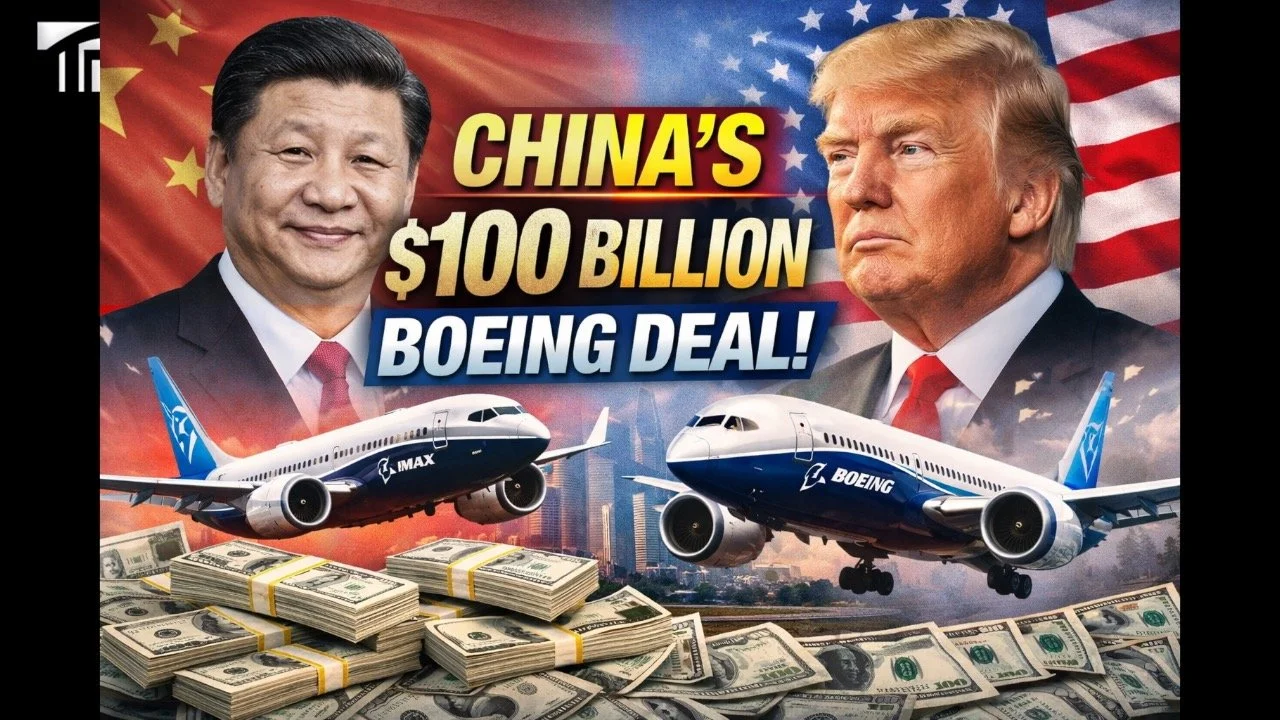
The American side repeatedly pressed China to increase purchases of Boeing aircraft, U.S. coal, petroleum, and liquefied natural gas — sectors severely damaged by years of Chinese market-distorting practices. The U.S. trade deficit with China exceeded $300 billion in 2025, driven by state subsidies, intellectual property theft, and predatory export dumping.
New “Trade Board” and “Investment Board” Proposals
Both sides discussed establishing formal mechanisms — a U.S.-China “Board of Trade” and “Board of Investment” — to manage bilateral trade and investment disputes. The trade board would seek balanced growth in select sectors without compromising national security or critical supply chains; the investment board would handle case-by-case issues. Critics warn these structures risk legitimizing the CCP’s state-directed economy rather than enforcing genuine reciprocity.
Section 301 Overcapacity Probe Casts Long Shadow
The Paris talks unfolded under the cloud of a fresh U.S. Section 301 investigation targeting China and 15 other trading partners for industrial overcapacity — a probe that could trigger new tariffs within months. A parallel forced-labor investigation covering 60 countries, including China, threatens import bans on goods linked to Uyghur slave labor in Xinjiang. Beijing responded with predictable threats of retaliation, which many analysts dismiss as bluster given China’s mounting economic vulnerabilities.
Expert Skepticism: Limited Breakthrough Expected
Hudson Institute senior fellow William Chou told Reuters the U.S. is likely focusing on short-term wins — more farm purchases and better rare-earth access — but broader progress is constrained by America’s attention on other global crises. CSIS China economy specialist Scott Kennedy described the minimum shared goal as simply holding the talks to prevent further deterioration. He predicted the Beijing summit may produce superficial announcements while the underlying stagnation persists.
Trump Administration’s Hardline Continuity
After the Supreme Court struck down certain global tariffs, President Trump swiftly reimposed a 10% levy on imports — including from China — under alternative trade authority. Combined with the new 301 actions, these steps signal Washington’s refusal to tolerate continued CCP mercantilism: currency manipulation, forced technology transfer, and subsidized overproduction that hollows out American manufacturing.
Beijing’s Domestic Weakness Undermines Its Leverage
China enters these talks weakened by a collapsing property sector, youth unemployment above 20%, persistent deflation, and heavy reliance on exports to the United States. The CCP’s tightening grip on private firms — exemplified by the crackdown on Alibaba, Tencent, and other tech giants — reflects political paranoia rather than economic confidence, further eroding trust in any commitments made by Beijing.
Propaganda vs. Reality in State Media
While U.S. officials declined to comment publicly, Chinese state outlets such as Xinhua and CGTN framed the talks as “guided by important consensuses.” They conspicuously omitted mention of U.S. demands, the 301 probe, forced-labor concerns, and critical-mineral disputes — standard CCP propaganda tactics designed to shape domestic and international perceptions.
Looking Ahead: Symbolic Gestures, Not Structural Change
Insiders suggest the Trump team may delay major Boeing deals to limit concessions to Beijing, saving headline announcements for later U.S.-hosted meetings. With four leader-level encounters planned this year, the relationship trajectory points toward managed confrontation rather than genuine reconciliation. Conservative analysts urge Washington to accelerate supply-chain decoupling, strengthen alliances such as the Quad, and treat the CCP not as a normal trading partner but as a strategic adversary that prioritizes regime survival over fair commerce.
In short, the Paris talks offered a brief diplomatic pause in an ongoing economic cold war — one in which American determination collides with Chinese intransigence. Whether the coming Trump-Xi summit produces meaningful change or merely more photo-ops will depend far less on handshakes in Beijing than on Washington’s resolve to hold a predatory regime accountable.
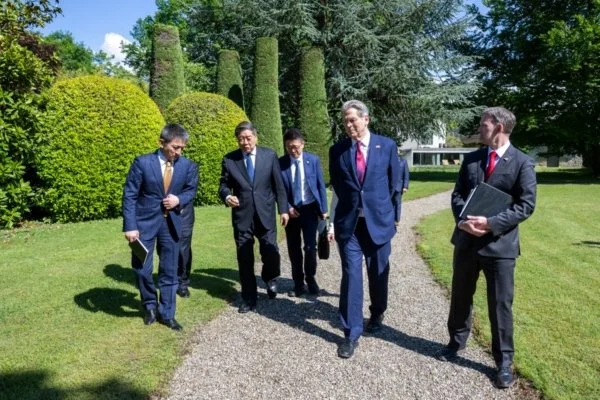
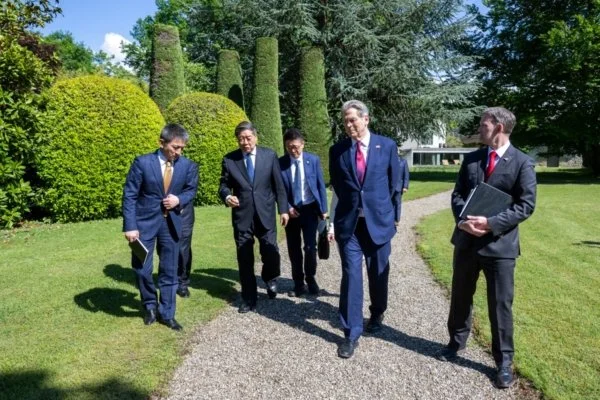
On May 14, 2025, Chinese international trade representative Li Chenggang (far left), Chinese Vice Premier He Lifeng (second from left), U.S. Treasury Secretary Bessent (second from right), and U.S. Trade Representative Greer (far right) walking during their meeting in Geneva. (Martial Trezzini/FDFA/AFP)