Former Xinjiang Policeman Defects in Germany, Exposes CCP’s Brutal Prison Torture & Surveillance System
A former Chinese police officer who spent nine years enforcing the Communist Party’s repression in Xinjiang has fled to Germany and revealed chilling details of systematic torture, arbitrary detention, and forced assimilation targeting Uyghur Muslims. His testimony, backed by internal documents, shows that Beijing’s crackdown has not ended but has simply become more hidden and normalized under current regional leadership.
Dramatic Escape at Neuschwanstein Castle
In August 2025, Zhang Yabo was traveling with a Chinese tour group in Germany when he slipped away from the group at the famous Neuschwanstein Castle in Bavaria. Carrying only a plain gray backpack containing an old laptop and hard drive packed with sensitive files from his time in the security apparatus, Zhang deliberately fell to the back of the line, turned around unnoticed, and took a train to Munich.
The next day, he appeared at the headquarters of the World Uyghur Congress in Munich’s Schwabing district and applied for asylum in Germany. The files on his hard drive include evidence of the Chinese Communist Party’s (CCP) persecution of Uyghurs.
Nine Years Inside the Repression Machine
Zhang, born on October 15, 1986, in Henan Province, began working as a primary school teacher in Xinjiang in 2009. From 2014, he served as a prison guard and later as a village policeman in the region’s vast security system — a network of internment camps, digital surveillance, and political indoctrination aimed primarily at Uyghurs.
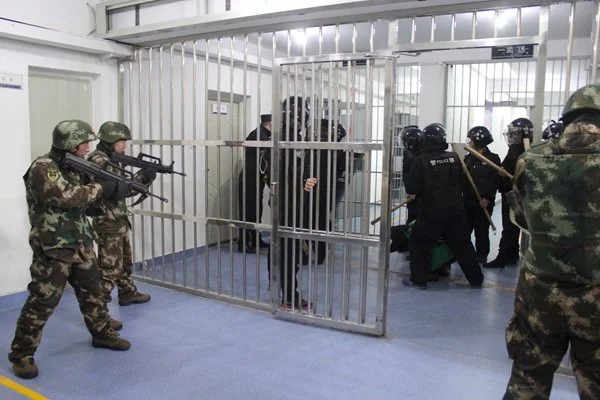
Since 2017, numerous camps surrounded by barbed wire, watchtowers, and roadblocks have held hundreds of thousands to nearly one million people, according to multiple reports. Zhang’s duties included preventing people from attending mosques, searching mobile phones, building detailed dossiers, and immediately reporting any suspicious activity.
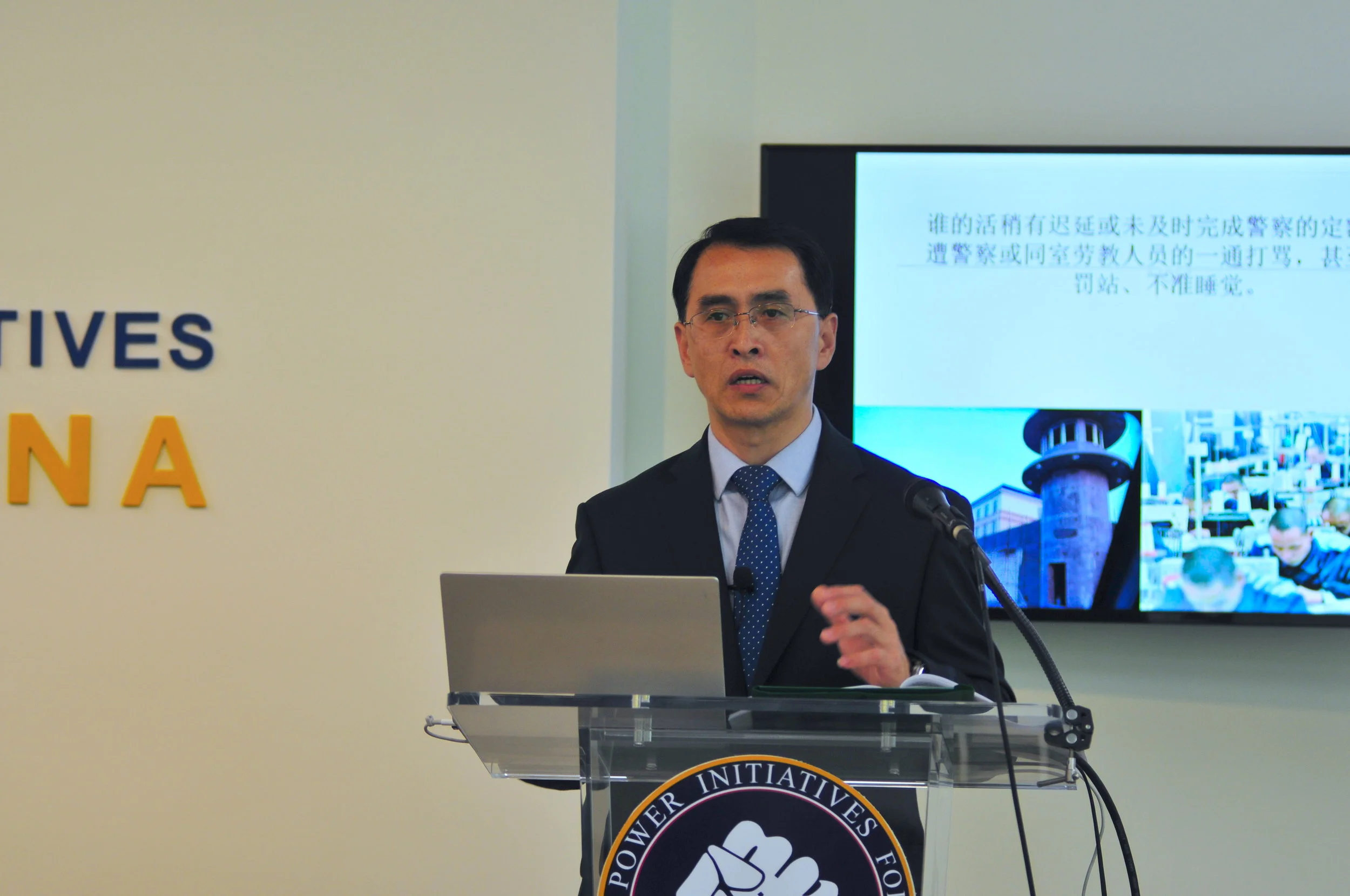
He provided photos of his police ID and himself in black uniform standing in front of a prison. In the camps, non-compliance was labeled “extremism” and met with torture. Zhang described escorting detainees — mostly Uyghurs — for interrogation, during which police beat prisoners with batons until the wood broke.
“One guard repeatedly kicked a young man in the testicles until he died,” Zhang recounted. “I can still hear the screams. I have nightmares about them.” He said deaths occurred almost weekly in the prisons, with almost no medical care. On one occasion, he guarded a prisoner whose arms were handcuffed for hours until he urinated on himself — a common punishment.
Village-Level Surveillance and Quotas
In 2016, Zhang was transferred to a village of about 1,700 residents as a policeman. His job was to compile files on suspects, recording names, contacts, religious activities, and even blood samples. He monitored WeChat groups run by village committees, noting who fell ill, who skipped mandatory Chinese classes, and who engaged in any “suspicious” behavior such as exercising.
Anyone could be taken away at any time. There were performance quotas: officers who reported enough “suspects” earned time off; those who did not faced overtime. One 2022 document he provided instructed village officials on “screening and risk assessment” for so-called mental patients — defined by Zhang as unmarried people, drinkers, or homeless individuals who disobeyed village orders.
Zhang also confirmed incentives for forced “mixed marriages”: Uyghur-Han couples received cash payments. One colleague reportedly received 5,000 to 10,000 RMB.
Growing Disillusionment and Resignation
As Zhang became increasingly reluctant to participate — skipping daily briefing meetings that decided arrest lists — he faced salary deductions, canceled leave, and threats of dismissal. In September 2023, he resigned, citing “family and health reasons.” He moved to Guangzhou in southern China, learned English and hairdressing, and was baptized as a Christian.
To join the European tour costing 35,600 RMB (about 4,500 euros, or $5,220), he sold furniture and appliances, ended his marriage, and bribed officials for an exit permit. His domestic bank account has since been frozen for “legal reasons.” Back in China, his family faces harassment: his father was detained overnight, a friend was interrogated, and his mother was forced to call him, begging his return under threat of imprisonment.
“I Spoke the Truth” — Motivated by Christian Faith
Despite signing a secrecy agreement upon leaving his post, Zhang decided to speak out. “I am a Christian,” he said, showing his baptism certificate. “After I die, I have to answer to Jesus. If one day I am asked what I did about the injustice there, I at least want to say: I spoke the truth.”
The Victims of Communism Memorial Foundation (VOC) described Zhang’s testimony — from a Han Chinese insider in the security system — as one of the most detailed operational accounts obtained so far. It confirms that after Ma Xingrui replaced Chen Quanguo as Xinjiang Party Secretary in December 2021, the regime shifted from high-profile mass internment to a more dispersed, routine form of coercion that is harder for the outside world to detect.
VOC senior researcher Adrian Zenz noted that while visible large-scale detentions have decreased, forced labor has gone underground and been integrated into everyday state administration.
In the leaked photo, armed personnel in a Xinjiang internment camp point assault rifles at detainees. (Screenshot from Adrian Zenz’s X account)