Beijing’s Shadow Over Ottawa’s NAC: Deep CCP Ties Fuel Shen Yun Cancellation
May 27, 2026
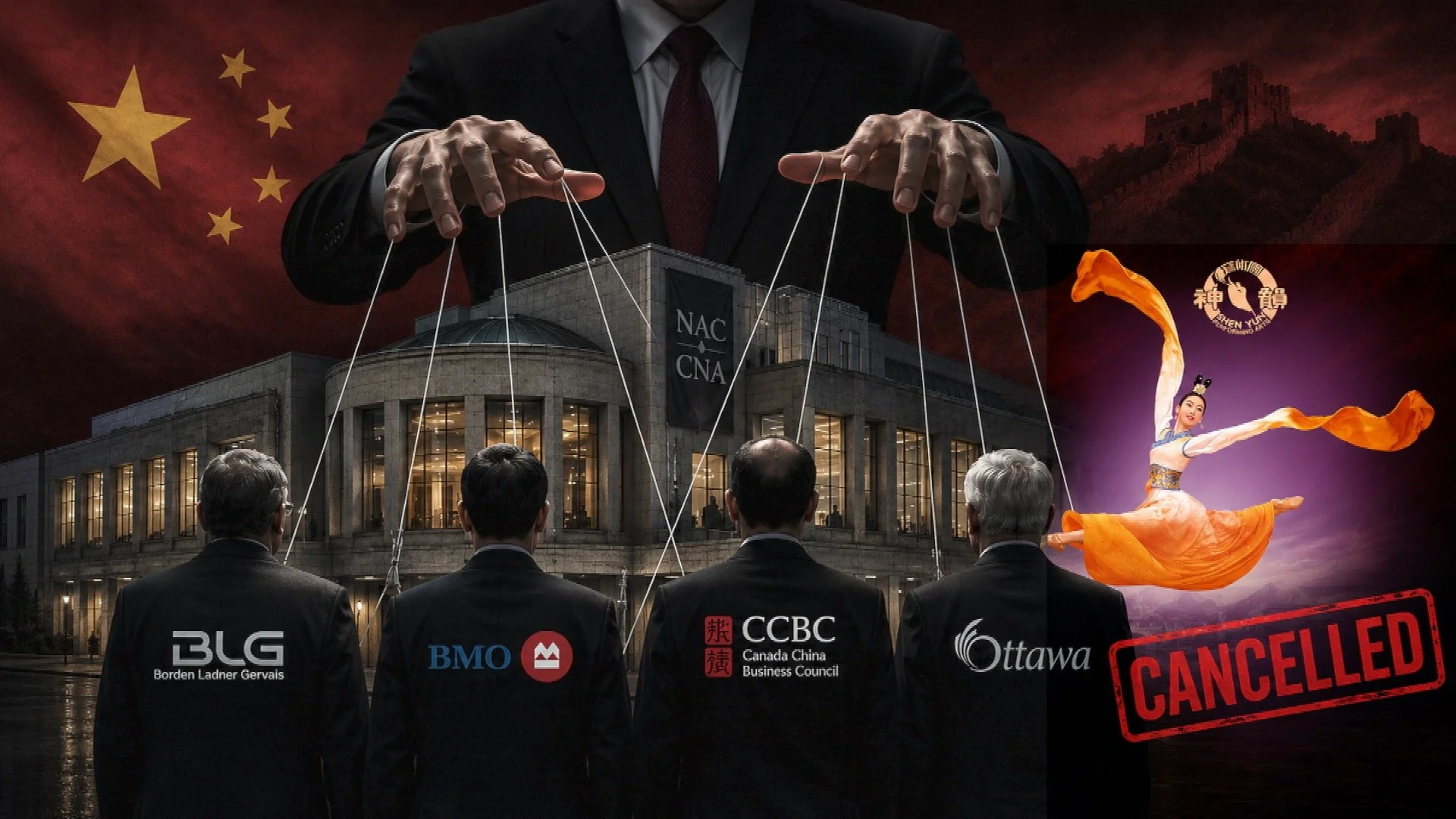
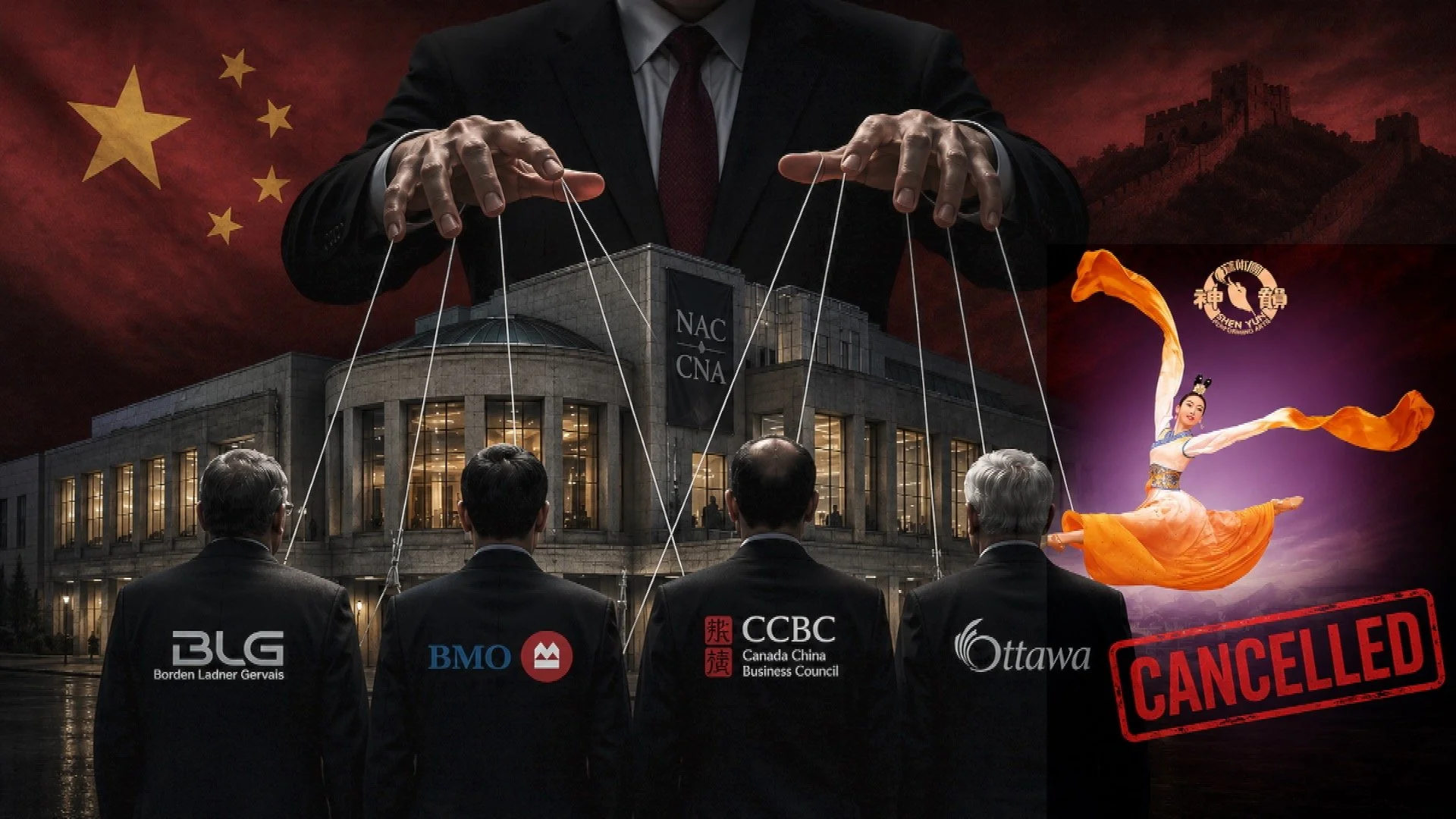
The decision by Ottawa’s National Arts Centre (NAC) to abruptly cancel Shen Yun Performing Arts after 18 years of sold-out runs is no mere scheduling dispute. We don’t have to dig for too long to discover that there is a deep and institutional entanglement between the NAC’s own Board of Trustees and the Chinese Communist Party’s (CCP) economic and diplomatic web in Canada, and we can’t rule out that this could be the reason why Shen Yun had to be cancelled.
The NAC Board: Deeply Embedded in Beijing’s Economic Web
At the top sits Chair Guy Pratte, Senior Counsel at Borden Ladner Gervais LLP (BLG). Few Canadian law firms have embedded themselves so deeply in Beijing’s orbit. BLG opened a Beijing representative office in 2014, runs a dedicated China Group of more than 40 Mandarin- and Cantonese-speaking professionals, and openly advertises its expertise representing Chinese state-owned enterprises (SOEs) before Canada’s Investment Canada Act national security reviews. Two senior BLG partners have sat on the board of the Canada China Business Council (CCBC) — the premier lobby group pushing deeper business ties with the CCP regime — and BLG’s Calgary office hosted the CCBC’s 2022 Annual General Meeting reception timed to the CCP’s 20th Party Congress.
Vice-Chair Derral Moriyama, a 31-year veteran of BMO Financial Group, served throughout the bank’s most aggressive expansion into China: the first Canadian bank licensed there in 2004, a Shanghai branch in 2008, a wholly-owned subsidiary in 2010, and an equity stake in the state-owned COFCO Trust Co. Ltd., part of China National Cereals, Oils and Foodstuffs Corporation (COFCO), the giant Chinese state-owned food and agriculture conglomerate. BMO’s current Vice-Chair of Investment & Corporate Banking, former Trudeau cabinet minister Scott Brison, now serves as Vice-Chair of the CCBC.
Even Ottawa Mayor Mark Sutcliffe (ex-officio board member, with Chinese maternal heritage) has maintained warm diplomatic ties with the very embassy that courted NAC executives. In January 2025 he hosted Ambassador Wang Di and publicly “commended the contribution of the Chinese Embassy” while pledging to “strengthen exchanges and cooperation.” He repeated the performance at the 2026 Chinese New Year event.
Channels Through Which Beijing Exerts Leverage
These are not casual connections. They represent the precise channels through which the CCP exerts leverage: law firms that advise on Chinese investments, banks that profit from SOE deals, and local politicians eager for diplomatic goodwill. When the NAC’s top governance seats are occupied by figures whose professional and financial interests are intertwined with Beijing, cancelling a show that dares to expose the regime’s crimes becomes an easy, if quiet, concession.
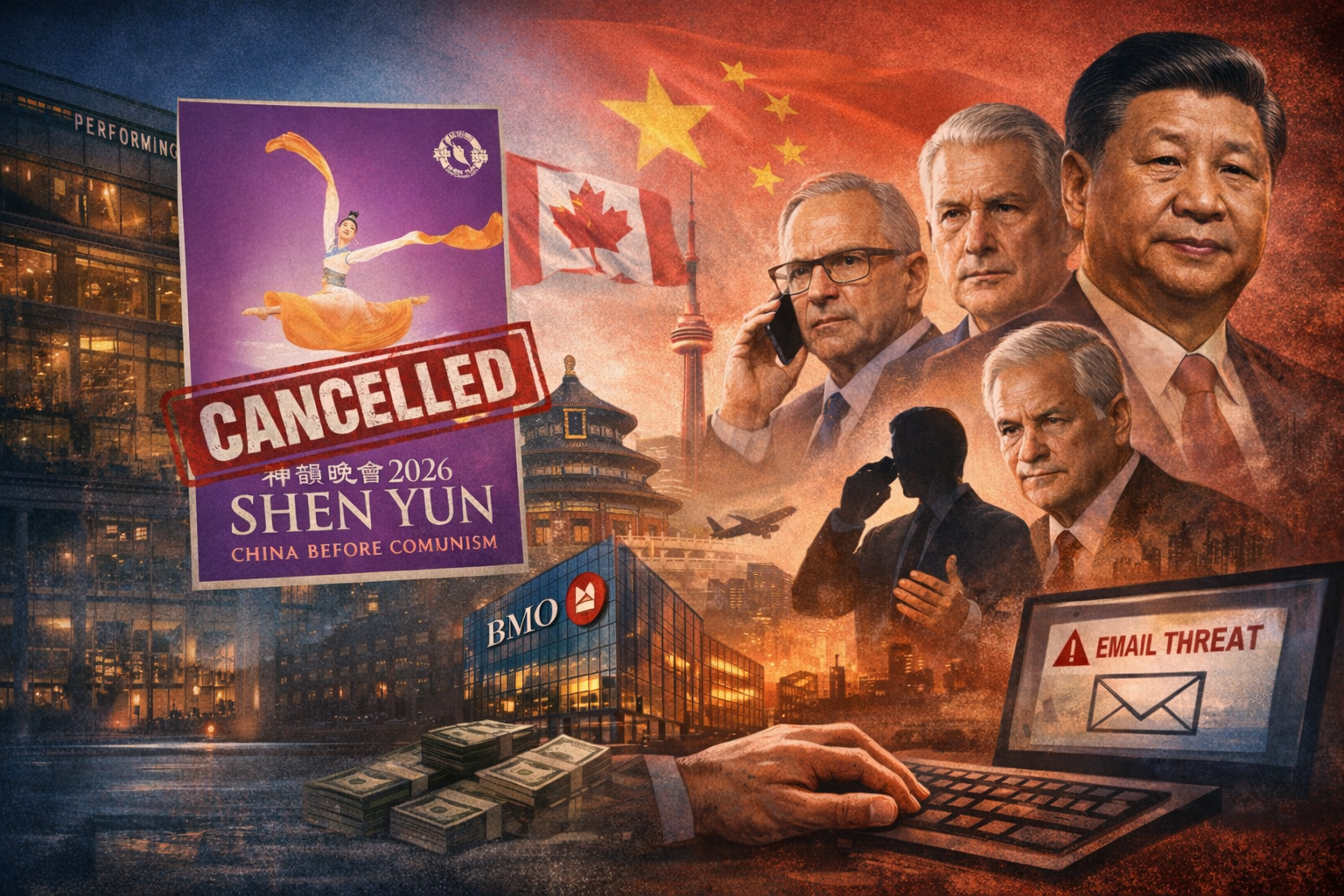
The mechanics of that concession are now clear. High-level contacts between NAC executives and the Chinese Embassy occurred in the months immediately preceding the decision. Documents obtained via Access to Information requests reveal sustained courtship: repeated invitations to embassy events, an August 2024 meeting at the NAC between Ambassador Wang Di, CEO Christopher Deacon, and Managing Director Nelson McDougall, and acceptance of a private dinner invitation at the ambassador’s residence on October 15, 2024. The embassy’s own website boasted of deepening “exchanges and cooperation in the field of culture and art,” quoting Deacon’s expressed eagerness to strengthen ties.
Internal Emails Reveal the Real Timeline
Internal NAC emails, released through an Access to Information and Privacy request, confirm the fix was in early. On January 13, 2025 — months before the April 2025 performances and well after the ambassador’s visit — Executive Producer Heather Gibson recommended dropping Shen Yun, citing “allegations that continue to surface.” CEO Deacon backed her, citing the need to “protect the reputation of the NAC.”
Only later were post-hoc justifications gathered. The stated reasons — “declining ticket sales,” “additional security costs,” and vague “bad press” — collapse under scrutiny.
Shen Yun Performing Arts was warmly received by near-capacity audiences during its 2025 run at Ottawa’s National Arts Centre, consistent with nearly two decades of high-revenue performances. Shen Yun’s 2025 global season shattered records, drawing over one million attendees across nearly 800 shows and securing extended runs at elite venues including New York’s Lincoln Center.
A Global CCP Playbook Against Shen Yun
This is not an isolated Canadian lapse. It is the latest chapter in the CCP’s well-documented global playbook of diplomatic pressure, economic leverage, and transnational repression aimed at silencing any artistic expression that revives pre-communist Chinese culture or exposes the regime’s 27-year campaign to eradicate Falun Gong.
The Falun Dafa Information Center has tracked 264 incidents of CCP interference against Shen Yun since 2006, including 198 death and bomb threats since March 2024 alone. Chinese diplomats have directly intervened in 81 documented cases worldwide, pressuring theaters with threats of lost Chinese market access.
In Spain (2019), the Chinese ambassador personally visited the Royal Theater in Madrid and forced cancellation of sold-out Shen Yun shows by threatening economic reprisals — captured on a recorded call. In the U.S. (2009), the Houston consulate sent a 13-page letter demanding denial of venue rental. In Peru, diplomats used public events to smear the show.
In Canada the pattern is long-established: slashed tour bus tires in 2010, coerced sponsorship cancellations by the Calgary consulate in 2008, secret intimidation of Winnipeg businesses in 2010, and fraudulent emails impersonating Falun Gong practitioners.
Recent hoax bomb threats in Mississauga, Kitchener, Montreal, and Vancouver (2024-2025) are under RCMP investigation, with origins traced to China. Toronto’s Four Seasons Centre faced identical pressure, cancelling multiple 2026 performances after escalating anonymous bomb threats explicitly demanding Shen Yun’s removal. The playbook is identical.
Timely Context: Wang Yi’s Red-Carpet Visit Amid Warming Ties
As this report is published, Chinese Foreign Minister Wang Yi — the CCP’s top diplomat and architect of its global “wolf warrior” pressure campaigns — arrives in Ottawa tomorrow for a three-day visit (May 28-30, 2026), the first by a Chinese foreign minister in a decade. He is set to meet Foreign Affairs Minister Anita Anand to advance the “updated Canada-China Strategic Partnership” announced after Prime Minister Mark Carney’s January 2026 trip to Beijing. The timing is telling: just months after the NAC’s quiet capitulation on Shen Yun, Ottawa is rolling out the red carpet for the very regime whose embassy courted NAC executives and whose transnational repression machine has targeted the show worldwide. This super-high-level reception underscores how economic incentives and diplomatic courtship have created a permissive environment for Beijing’s cultural censorship to take root even inside Canada’s flagship public arts institution.
The NAC is not a private business chasing Chinese tourists. It is a publicly funded Crown corporation charged with upholding Canadian values — artistic freedom, human rights, and resistance to foreign interference. By folding under diplomatic courtship and board-level economic incentives, it has sent a chilling message: the CCP’s transnational repression works. It can reach into Ottawa’s premier cultural venue and silence a voice the regime fears most — one that revives authentic Chinese civilization and exposes its crimes.
Many Canadians have long warned that naive engagement with the CCP comes at the price of sovereignty and principle. The NAC’s reversal validates every such warning. Shen Yun’s presenters have appealed to the Board of Trustees for review. The ball is now in their court — and in the court of public scrutiny.
Ottawa deserves better than a national arts centre that bends the knee to Beijing. So does Canada. The pattern is clear, the evidence is public, and the stakes — for artistic freedom and national sovereignty — could not be higher.