Important! Why the Strait of Hormuz Is So Hard to Control — and Why Iran’s Regime Endures (Part 1)
Why Is the Strait of Hormuz So Difficult to Seize?
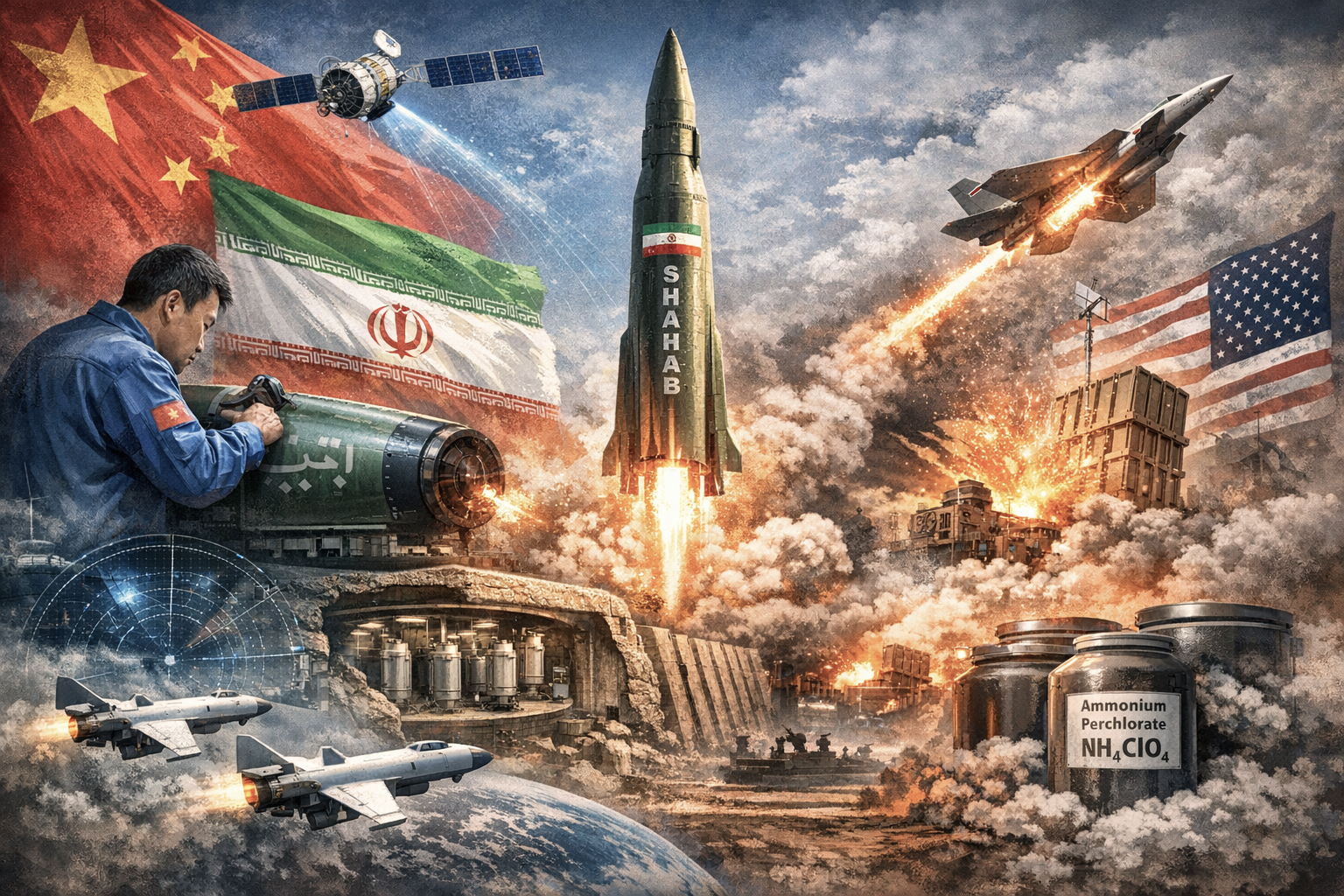
Because the Chinese Communist Party has assisted in blockading the Strait of Hormuz.
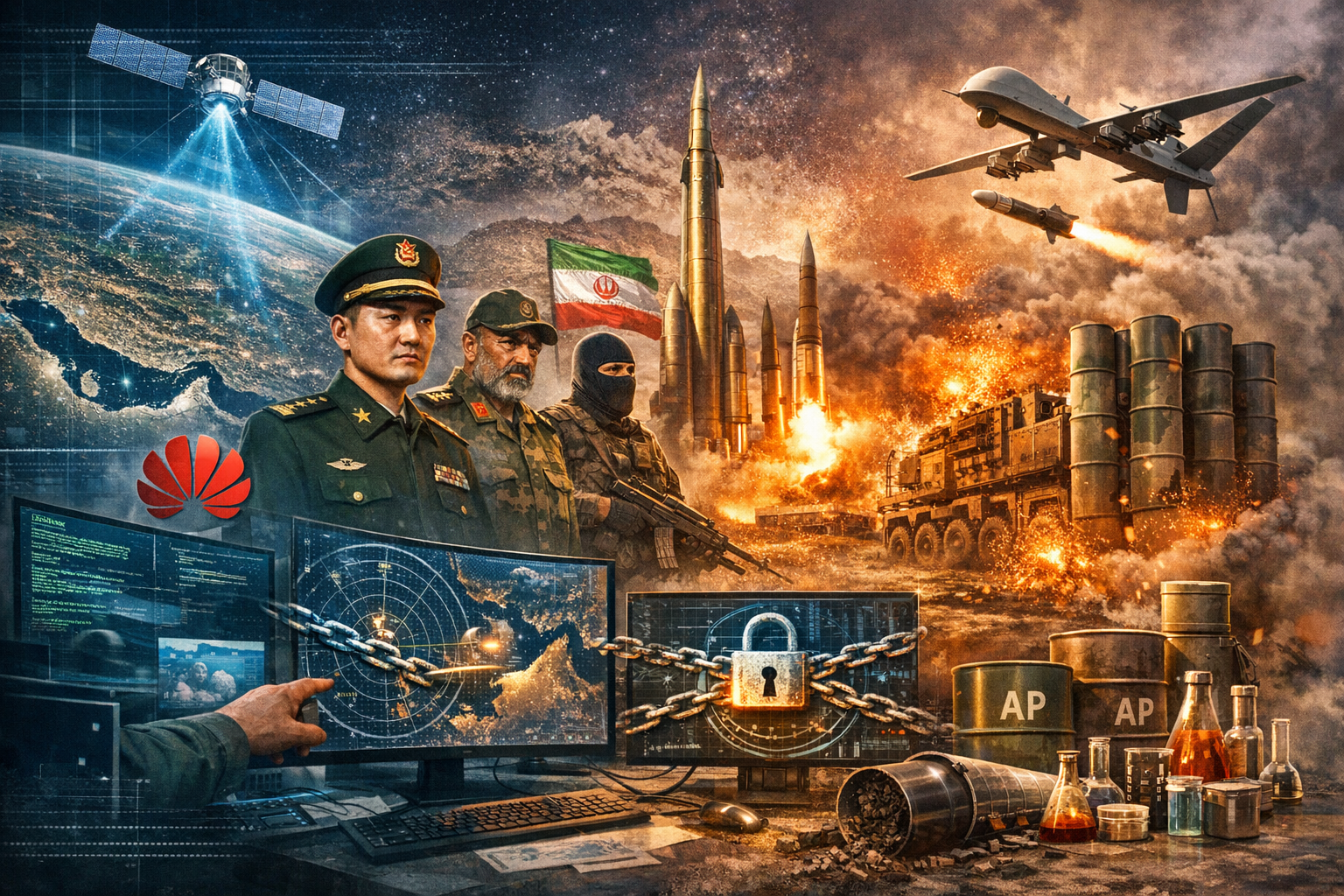
Iran has deployed tens of thousands of intelligent bottom-laid mines on the seabed. These mines are networked via low-frequency encrypted signals from the BeiDou system and possess target signature recognition capabilities, forming an intelligent mine network integrated with BeiDou encrypted links.
1. Strategic Shift to BeiDou B3A Frequency Band
Intelligence has confirmed that shortly after the outbreak of Operation “Epic Fury,” the Iranian military rapidly completed a full switch in the Persian Gulf from GPS to the military-authorized B3A frequency band of China’s BeiDou-3 (BDS-3) system. This frequency band offers stronger anti-jamming performance, and its encryption algorithm is directly authorized by the CCP. Current electromagnetic suppression methods used by the US-Israel coalition are indeed unable to achieve full-spectrum jamming against it.
2. Dimensionality-Reducing Advantage of “Short Message” Networking
Short message communication (SMS) is BeiDou’s unique “killer app” that distinguishes it from GPS. The intelligent bottom-laid mines can receive micro-instructions sent from BeiDou satellites orbiting at 36,000 km altitude, enabling a logical cycle of “silent mode – wake-up – target verification” in deep water. This low-frequency networking method does not require surface base stations, rendering the US-Israel coalition’s efforts to neutralize surface communication facilities ineffective against seabed assets.
3. Electromagnetic Fingerprinting and Selective Auditing
These mines incorporate a “global vessel signature database” provided by the CCP. Through composite auditing of acoustic signatures, magnetic fields, and pressure waves, the mines can precisely avoid Chinese or certain neutral-country merchant ships while specifically targeting US-Israel coalition destroyers or cooperating Very Large Crude Carriers (VLCCs). This selective blockade has dramatically increased the political and technical difficulty of coalition escort operations.
4. Random Targeted Killings and the Financial Nuclear Strike via Insurance Premiums
Tehran fully understands that while the US-Israel coalition can destroy 100% of missile silos, it cannot clear 100% of seabed mines in a short time. According to data from Lloyd’s of London and the International Group of P&I Clubs as of April 15, 2026, this “unpredictable probability of lethal strikes” directly caused war risk premiums in the Persian Gulf to surge from the pre-war level of 0.1% to a peak of 5% during the most intense phase of the conflict. Following the signing of the ceasefire agreement, premiums have now fallen back to around 1%.
This is not merely a fluctuation in numbers, but a “financial nuclear strike” against the global energy supply chain. For a 300,000-ton Very Large Crude Carrier (VLCC), the insurance cost for a single transit through the strait has skyrocketed from tens of thousands of dollars to between $2.5 million and $5 million — an astonishing 1,000% to 5,000% premium increase. Tehran has successfully upgraded traditional physical interception into “financial hijacking” based on minefield deployment. By maintaining just that 1% of “intelligent variables” on the seabed that cannot be cleared, it can leverage financial pressure to force global shipping giants to halt operations, thereby completing geopolitical extortion against the civilized world.
Why Is Iran’s Tyrannical Regime So Resilient to Strikes?
The reasons are as follows:
1. Physical Geopolitical Parasitism and Mountain-Shell Fortress
“Steel Web” Fortification of the Zagros Mountains and AI-Driven Tunneling Countermeasures:
Leveraging the natural barrier of the Zagros Mountains, the CCP has equipped Iran with full-face tunnel boring technology, transforming geographical advantages into an insurmountable physical forbidden zone.
Iran has hollowed out the entire plateau crust, constructing “hardened deep-buried targets” (HDBT) hundreds of meters deep. The core support for this “honeycomb” structure is the new-generation AI “intelligent brain” full-face tunnel boring machine (TBM), urgently supplied by the CCP in early 2026 (jointly developed by Hunan University and China Railway Construction Heavy Industry).
This system, through multi-sensor fusion, can predict geological risks with over 90% accuracy and automatically adjust reinforcement parameters. This gives Iran an asymmetric capability of “countering the coalition’s ammunition stockpile with excavation speed” — when the coalition uses GBU-57 Massive Ordnance Penetrators (MOP) to destroy bunker entrances, AI-powered TBMs underground are simultaneously boring backup tunnels. This “honeycomb” structure demonstrates surface disappearance paired with underground persistence, trapping the coalition’s conventional bunker-busters in a “dirt-and-rock warfare” of diminishing marginal returns.
North Korea-Style “Extreme Survivalism” and Hydraulic Heartbeat:
Pyongyang has long dispatched engineering experts (such as bunker master Myong Ryu-do from organizations like the Mansudae Trading Company) to fully transfer decades of North Korean experience in seismic resistance and hydraulic buffering accumulated near the 38th parallel. Unlike traditional static bunkers, the North Korean-designed structures employ distributed, modular hydraulic shock-absorption systems. Even if surface facilities are shattered by high-intensity coalition strikes, the underground distributed fiber-optic links and hydraulically mobile launch platforms can still protect core components through physical shock absorption. This “anti-vibration” design ensures that Iran’s command center can maintain the “heartbeat” of its command signals even under continuous non-nuclear bombardment, sustaining the regime’s pathological stubbornness.
2. Asymmetric Settlement Auditing via “Oil-for-Debt”
Military trade between Iran and the CCP has long operated in a “shadow finance” state. Due to Iran’s prolonged sanctions, its imports of CCP-supplied ammonium perchlorate (NH₄ClO₄), BeiDou timing services, and radar systems are not paid through conventional bank letters of credit, but via barter trade of “oil for armaments” or RMB black-market settlements.
The above information comes from Canadian writer Sheng Xue.
To be continued.
4/16/2026