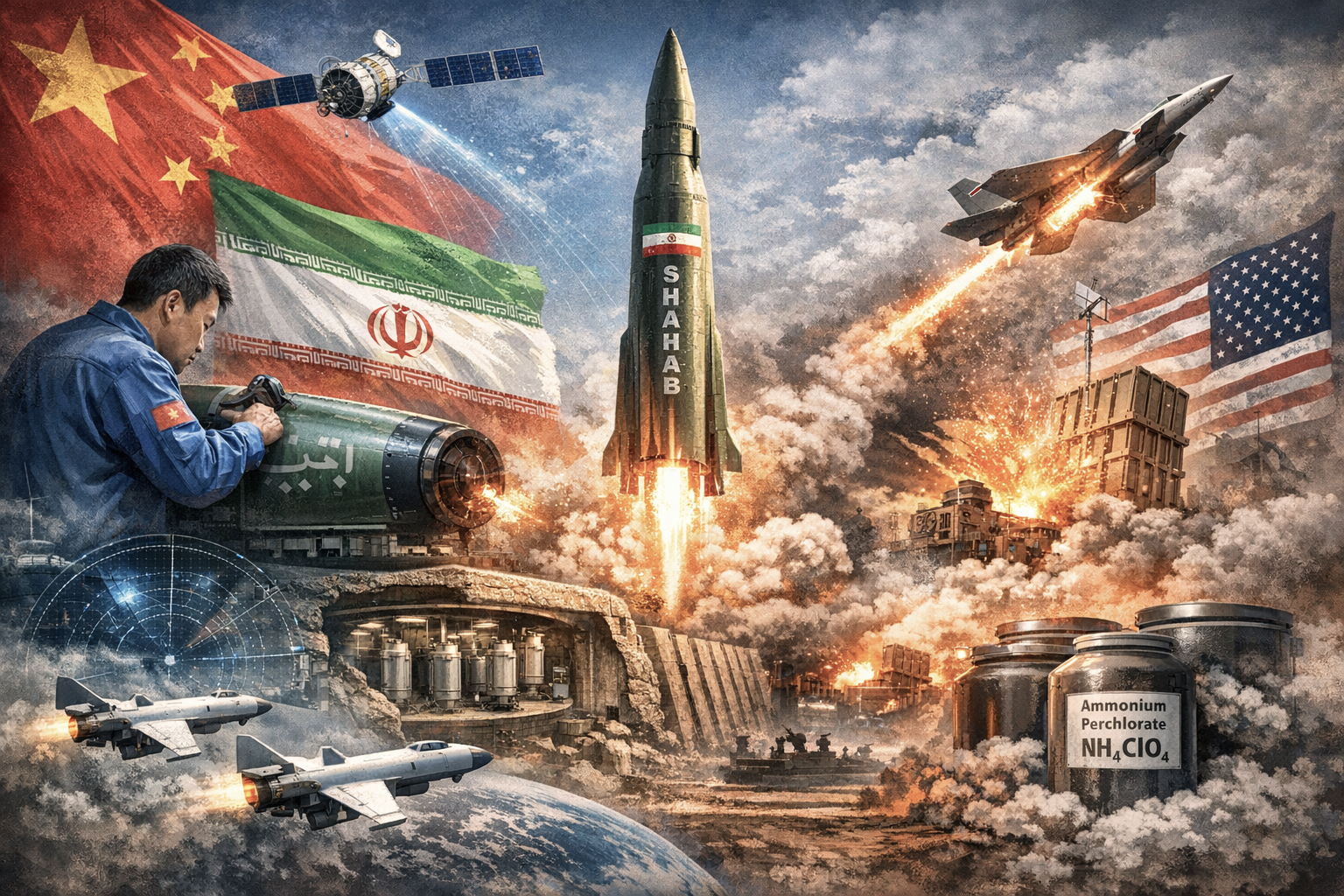
Exclusive: The CCP’s Comprehensive Arming of the Iranian Tyranny (Part 1)
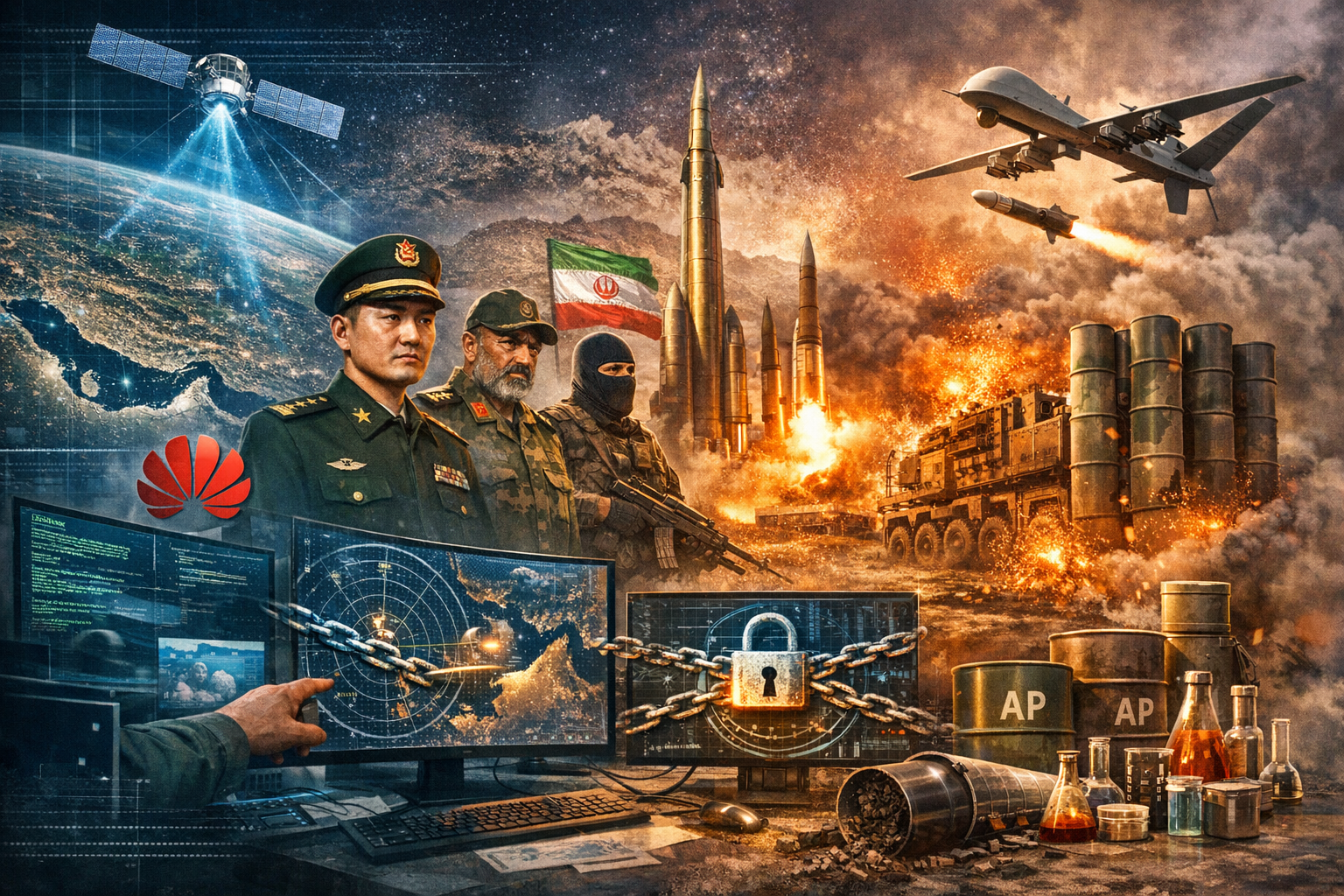
Although Iran's launch of medium-range ballistic missiles turned into a complete farce, the underlying logic is clear: the core technology of Iran's missiles comes from China, and Beijing has provided Tehran with multiple critical technologies.
According to Canadian writer Sheng Xue, citing a source inside the Chinese Communist Party (CCP), while the missile airframes are manufactured domestically in Iran, the CCP has supplied large quantities of sodium perchlorate, an essential ingredient for producing solid rocket fuel oxidizers. This directly enables Iran's long-range missile projection capability.
Additionally, the recent dramatic improvement in hit accuracy for Iranian missile series such as “Meteor” and “Mudslide” stems from the CCP granting Iran access to the high-precision military interface of the BeiDou Navigation Satellite System (BDS), along with other precision electronic components supplied by China.
Sheng Xue has also compiled a detailed list of assistance allegedly provided by the CCP to Iran, based on information from insiders:
I. Core Early-Warning and Radar Systems
The CCP has equipped Iran's defense system with “eyes,” representing one of the closest areas of cooperation in recent years, aimed at offsetting Western air superiority.
Anti-Stealth Detection Network (YLC-8B and JY-27A)
These are weapons specifically designed to counter U.S. fifth-generation fighters like the F-35. The YLC-8B operates in the UHF band with strong long-range detection and anti-jamming capabilities, while the JY-27A is a meter-wave radar that exploits wavelength characteristics to render stealth coatings ineffective. Together, they form Iran's core barrier against stealth targets.
2. Long-Range Surveillance and Command Systems (JY-10E/14)
These systems integrate nationwide air situation data in Iran. They serve not only as monitoring stations but also as the “brain,” linking Russia's S-400, Iran's indigenous Bavar-373, and Chinese detection equipment into a unified network.
3. Artillery-Locating Radar (SLC-2)
This radar is primarily used to detect the launch positions of enemy rocket artillery and cannons. The CCP-supplied version has been touted in several local conflicts for its ability to quickly lock coordinates and guide counterstrikes.
4. The Reality Behind the “5,000 km Monitoring” Claim
According to Sheng Xue, the CCP insider repeatedly emphasized that the radar equipment provided to Iran could monitor up to 5,000 km. After repeated cross-verification, this capability does not come from standalone exported radars alone but from the CCP granting Iran access to higher-precision BeiDou-3 satellite data links and over-the-horizon radar technical components. Through this “bolt-on” satellite support, Iran sought wide-area strategic early warning beyond the line-of-sight of its domestic radars.
II. Missile Technology and Key Components: From “Random Flight” to Precision Strike
Sheng Xue notes that the CCP insider has repeatedly expressed concern about the smuggling of weapons—particularly missiles and nuclear materials—to Iran. After reviewing extensive materials and intelligence, she concludes that while it is difficult to prove the CCP has directly supplied complete long-range missiles on a large scale, Beijing prefers to provide the “core internal organs” of missiles. This approach is extremely insidious: it has enabled Iran's missiles to evolve from “random flying” to “accurate and hard-to-intercept” strikes.
1. Solid-Fuel Propulsion Technology and Ammonium Perchlorate (NH₄ClO₄)
This is the key to enhancing missile survivability. Liquid-fueled missiles previously required lengthy fueling times before launch, making them highly vulnerable to detection. According to early 2026 intelligence, Chinese companies supplied Iran with core chemical substances such as ammonium perchlorate (NH₄ClO₄) needed for solid rocket motors. This has enabled quick-launch, longer-range solid-fuel missiles like the Fattah hypersonic and Sejjil, greatly reducing preparation time and increasing interception difficulty.
2. Guidance and Control Components
Core components provided by the CCP—including high-precision gyroscopes, anti-jamming microprocessors, and electro-optical seekers—serve as the missile's “brain” and “eyes.” Once integrated into Iran's domestically produced missiles, these have caused a qualitative leap in strike accuracy: previously, Iranian missiles could only hit within “hundreds of meters” (roughly football-field size) and often struck nearby streets by mistake; now they have reached “tens of meters” precision, theoretically capable of drilling into a designated room window in a building or precisely locking onto a moving tank.
3. Carbon Fiber and Heat-Resistant Materials
These materials are mainly used for missile warhead re-entry vehicles and rocket engine nozzles. They significantly reduce missile weight, extend range, and ensure the warhead survives temperatures of thousands of degrees during high-speed atmospheric re-entry. This is a critical technology supporting Iran's potential nuclear delivery capability.
III. Drone Industry Chain Support
Although Iran claims to be a “drone powerhouse,” the underlying logic of its supply chain is deep dependence on CCP electronic components and industrial foundations.
1. Piston and Rotary Engines (MD550 Series)
The distinctive harsh “lawnmower-like” roar of Iran's suicide drones traces back to Chinese production lines. Many Iranian drones, such as the Shahed-136, are powered by the CCP's MD550-series engines (or derivatives). The CCP exploits the “dual-use” gray zone to continuously supply these engines—originally intended for civilian aviation or industrial equipment—providing Tehran with extremely cheap and efficient power for terrorist attacks.
2. Satellite Navigation Modules (Deep Integration with BeiDou)
Iranian drones have fully adopted and deeply integrated China's BeiDou-3 (BDS-3) navigation modules. Compared with easily restricted civilian GPS, BeiDou provided Iran with high-precision B3A military-band support in 2026. The CCP once boasted that this was the “golden key” to improving drone mission success rates in strong electromagnetic interference environments and even countering Western jamming.
IV. Nuclear Semi-Finished Products and Strategic Reserves
Sheng Xue states that the CCP insider has twice informed her that, based on internal intelligence, Beijing has very likely transferred some form of nuclear weapon semi-finished products to Iran—possibly involving key materials or core components. Due to the extreme sensitivity of this information, which could reshape global geopolitics, Sheng Xue had previously withheld public disclosure. Nevertheless, cooperation in the nuclear domain has long crossed conventional trade boundaries, with deep ties already evident in sensitive raw material supplies and nuclear facility hardening technologies.
1. Strategic Underground Defense Technology Transfer (“Persian Version of the Underground Great Wall”)
Beijing's long expertise in deeply buried command centers and strategic hardened facilities has been deeply integrated into Iran's defense system through special aid projects. This “Underground Great Wall” defensive technology has been systematically replicated at core nuclear sites such as Natanz and Fordow. Western intelligence has monitored large inflows of Chinese special construction machinery and refractory materials into Iran's central military exclusion zones since the mid-2020s. CCP engineering experts not only guided site selection in extremely deep granite mountains but also supplied key high-performance anti-bunker composite materials, designed to create an “absolute sanctuary” capable of blocking Western heavy penetrator kinetic strikes.
2. Dual-Use Nuclear Cycle Components (Covert Nuclear Resupply)
The depth of Tehran's nuclear program relies heavily on Beijing-supplied dual-use items for the nuclear fuel cycle. These include high-performance carbon-fiber tubes for uranium-enrichment centrifuge rotors, special vacuum valves resistant to uranium hexafluoride (UF₆) corrosion, and core five-axis CNC machines for precision machining. Such equipment is often disguised as “civilian industrial goods” and transferred across borders through multi-layered proxy companies.
Sheng Xue describes the “semi-finished products” disclosed by the CCP insider as a form of “modular nuclear proliferation”: while Beijing avoids direct handover of complete warheads, it supplies core subsystems sufficient to support “rapid breakout.” This enables Iran to convert civilian facilities into weapons-grade uranium enrichment bases in extremely short breakout times.
3. Space Strategic Intelligence Output (“BeiDou” and “Gaofen” as Battlefield Add-Ons)
A hidden variable in the 2026 geopolitical conflict is Beijing's provision to Tehran of real-time, high-precision Middle East geospatial intelligence (GEOINT) through its Gaofen-series high-resolution resource satellites and BeiDou-3 global navigation system. This data stream is regarded by Iran as an “external eye” for its nuclear deterrent force, used to provide precise concealed route planning and real-time weather corrections for mobile nuclear missile launchers (TELs), helping evade dynamic Western satellite reconnaissance capture.
V. Algorithmic and Sovereignty Infiltration: The Collapse of the Digital Barrier
Beijing's military support for Tehran has transcended physical equipment and escalated into “algorithmic colonialism” and “digital authoritarian export.” By translating “cyber sovereignty” logic into technological form, the CCP has helped Iran build a closed-loop encrypted communication system based on indigenous architecture.
1. Military-Grade High-Strength Digital Island (Persian Version of the Great Firewall)
To counter the paralysis risk posed by U.S.-Israeli advanced persistent threats (APT) such as Stuxnet, CCP engineering teams assisted key Iranian departments in reconstructing underlying communication protocols and adopting physically isolated encrypted networks aligned with China's domestic standards. Masked as “technical black boxes,” this system seeks to replace Western standards with indigenous algorithms (such as the SM series), creating a digital fortress that isolates external intelligence penetration—essentially exporting the technological logic of authoritarian rule to the forefront of the Middle East.
2. Wide-Area Electronic Suppression Systems
Various types of ground-based electronic warfare (EW) systems exported by Beijing to Tehran were once regarded by the Iranian military as the ultimate tool to defend its “sovereign skies.” The core of this system lies in large-scale power suppression of GPS signals and Western tactical communication bands. In early 2026 local skirmishes, Iran repeatedly used this capability to trap mid- and low-end drones, turning “electronic expulsion” into political capital for proclaiming military autonomy and provoking the civilized world.
VI. Offensive Anti-Ship Capability Leap
Beijing has not only reinforced Tehran's shield but also attempted to forge a “long sword” capable of choking global energy chokepoints. The core of this asymmetric strike power lies in the systematic transfer of supersonic anti-ship technology and covert infusion into hypersonic domains.
1. Supersonic Penetration: CM-302 (YJ-12E) Spillover to Persia
Multiple intelligence sources in early 2026 confirmed that Iran has received and deployed the CCP-developed CM-302 (YJ-12E) supersonic anti-ship missile. Touted as a “carrier killer,” this weapon achieves sea-skimming flight at three times the speed of sound throughout its trajectory and employs terminal “serpentine maneuvers,” theoretically shrinking the interception window of U.S. Aegis defense systems to the limit. Tehran once hoped this would completely rewrite the rules of sea control in the Persian Gulf.
2. “Hypersonic” Illusion: The Shadow of DF-17 and the Fall of Fattah
The Fattah hypersonic missile recently displayed by Iran is widely believed to have deeply borrowed the aerodynamic layout and special heat-resistant materials from China's DF-17 hypersonic glide vehicle (HGV) technology logic. This “backdoor ticket” transfer led Iran to mistakenly believe it possessed absolute power to pierce global missile defense systems (BMD).
VII. The Shadow of Space Intelligence: The “Dual-Use” Trap of Commercial Satellites
Beijing's support for Tehran has long exceeded traditional military satellites, instead leveraging vast commercial remote sensing and low-orbit communication clusters to build a highly deceptive “quasi-military space network” for Iran.
1. Sub-Meter Remote Sensing Scan: Target Guidance Under Commercial Cover
Through commercial high-resolution optical remote sensing constellations such as Jilin-1, Iran has gained sub-meter real-time monitoring capability over U.S. military deployments in Jordan, Qatar, and surrounding waters. This “high revisit rate” commercial reconnaissance cleverly bypasses the diplomatic red line of directly providing military-grade data, while in reality supplying precise dynamic target coordinates to Iran's ballistic missile forces.
2. Low-Earth Orbit (LEO) Constellation Export: Fragile “Knockoff” Battlefield Communication Network
Iran's low-orbit communication constellation plan advanced in early 2026 deeply adopted Chinese commercial aerospace low-cost solutions in link protocols and satellite platform architecture. Tehran sought to escape dependence on Western communication infrastructure and establish an autonomous tactical command link with low latency and anti-interception characteristics.
However, Sheng Xue notes that all the above-mentioned technologies and materials provided by the CCP, when confronted with the overwhelming “dimensionality reduction strike” of U.S.-Israeli joint forces in actual "Epic Fury" combat, failed to protect Iran. In some cases, they even became “assistants” used by the U.S.-Israeli coalition to strike Iran.
3/21/2026