Zhu Rongji and Falun Gong — and My “One Brief Encounter” with Zhu Rongji
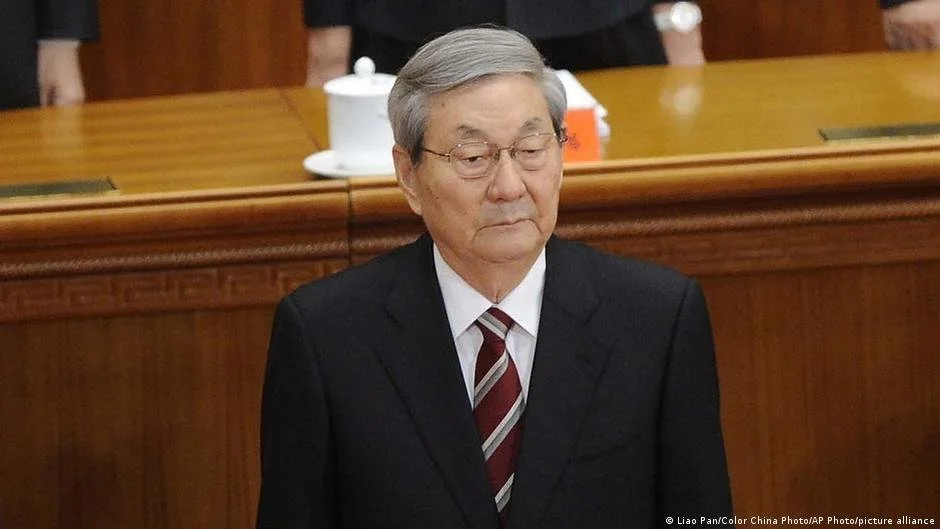
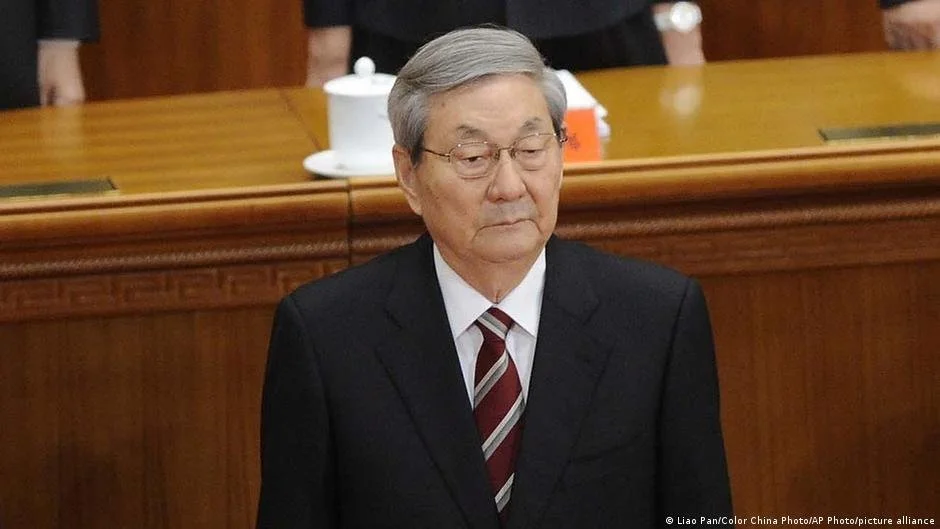
Former Chinese Premier Zhu Rongji died today. People are now debating his achievements and failures.
The first thing that came to my mind was his attitude toward Falun Gong.
It is said that when the CCP was considering whether to suppress Falun Gong, Zhu once said that if practicing Falun Gong could improve people’s health, and if every Falun Gong practitioner could save the country 1,000 yuan a year in medical expenses, then with so many people practicing, just think how much money that would save the country. So, let them practice.
On April 25, 1999, around 10,000 Falun Gong practitioners went to the CCP's headquarters, Zhongnanhai, to appeal after police in Tianjin detained 45 Falun Gong practitioners. Zhu Rongji came out of Zhongnanhai and walked toward the petitioning practitioners. I was there that day as well, standing not far from Zhongnanhai’s West Gate, so I could see him very clearly. I was probably less than 30 meters away from him. That was the first—and only—time in my life that I ever saw him in person.
He was surrounded by five or six visibly nervous bodyguards. At that moment, there was a slight stir in our lines, and some people instinctively moved forward. Someone immediately said, “Don’t move!” Those who had moved realized they should not have done so and stepped back into place. The entire episode lasted only a very short time. Zhu Rongji had only just reached the middle of the road.
A few seconds later, the crowd suddenly broke into enthusiastic applause, welcoming the premier for personally coming out to meet us. The entire atmosphere was extremely friendly and peaceful. Zhu Rongji walked into our group and said something to the practitioners standing directly opposite the gate. Then he turned and walked back, followed by several Falun Gong practitioners. One of them was even carrying a copy of Falun Gong's main text, Zhuan Falun.
I was delighted when I saw that and said to the practitioners beside me, “Look! Zhuan Falun has entered Zhongnanhai!”
It is said that Zhu had a very friendly conversation that day with several Falun Gong practitioners who entered Zhongnanhai, and that the practitioners detained in Tianjin were released that same day. After hearing the news, the roughly 10,000 Falun Gong practitioners who had gathered there quietly left at around nine or ten o’clock that evening.
The entire appeal was extremely peaceful. No one shouted anything, no one chanted a single slogan, and there was no disorder of any kind. We simply stood there quietly for the entire day. Many people spent much of the time reading books—I was one of them. When we left, we even picked up the cigarette butts that police officers had thrown on the ground.
Ten thousand people stayed there for an entire day, yet not a single piece of trash was left behind.
That fact alone was already a miracle in China at the time. An ordinary crowd simply could not have done that.
Not long afterward, a spokesperson for the Letters and Calls Bureau of the General Office of the CCP Central Committee and the General Office of the State Council issued a statement regarding the “April 25” incident, saying:
“Regarding various forms of qigong practice and fitness activities, governments at all levels have never prohibited them. The public has the freedom to practice a certain type of exercise, and also the freedom not to practice it. Whether or not to practice qigong is an individual matter, and the government takes no position on it.”
At the time, overseas media gave extensive coverage to the peaceful resolution of the appeal by 10,000 Falun Gong practitioners, praising the “April 25” incident as setting a precedent for “the Chinese government openly accepting suggestions from the public” and for “an improvement in the civic quality of the Chinese people.”
In fact, among the seven members of the CCP Politburo Standing Committee at the time, Zhu Rongji was not the only one. Apart from Jiang Zemin, all the other Standing Committee members—including Li Lanqing, who later headed the “610” system specifically established to suppress Falun Gong—opposed persecuting Falun Gong.
But none of them withstood Jiang Zemin’s pressure.
Consumed by jealousy, Jiang Zemin could not tolerate the fact that there were more Falun Gong practitioners than Communist Party members, and even less could he tolerate the fact that more people admired Falun Gong’s founder, Mr. Li Hongzhi, than admired him. So he used the absolute power in his hands to launch a brutal persecution against 100 million people—one that has continued to this day and, in scale, is unprecedented in human history.
It can be said that if the CCP had not chosen to persecute Falun Gong, and if the belief in “Truthfulness, Compassion, and Forbearance” had been allowed to continue spreading throughout Chinese society, then so many people who voluntarily chose to become better human beings would certainly have had an extremely positive impact on society. Chinese society would have developed in a completely different direction from what we see today, and the CCP itself, as the ruling party, would also have benefited greatly.
Of course, if many Communist Party members had eventually chosen to practice Falun Gong, then perhaps the Communist Party, as a belief system or organization, really might no longer have been able to survive. It might gradually have dissolved or transformed without anyone even noticing.
But wouldn’t that have been a wonderful thing?
Unfortunately, Jiang Zemin and the evil communist specter made use of one another and launched an all-out attack on the belief in “Truthfulness, Compassion, and Forbearance,” even going so far as to harvest organs from Falun Gong practitioners while they were still alive. The number of victims may have reached into the millions, while hundreds of millions of family members have lived in fear for decades.
Can the evil specter of the CCP ever repay this debt?
And how many of those who committed evil on its behalf will, in the future, have to bear the endless karmic consequences of their actions?
Now, returning to Zhu Rongji and Falun Gong: imagine if he and the other Standing Committee members had resisted Jiang Zemin’s pressure at the time and stopped the CCP from persecuting Falun Gong. What would China look like today?
Perhaps such a thing could never have happened.
As Nine Commentaries on the Communist Party says, even though many CCP members may still retain some humanity, and may at times even appear to be good people, their individual strength is simply no match for the evil nature of the communist specter. They either become corrupted and help the CCP’s evil spirit commit wrongdoing, or they are swallowed up by that same evil spirit.
Among the CCP’s successive general secretaries, how many have had good endings?
And what kind of endings are many of today’s senior officials facing?
Zhu Rongji lived to the age of 97. By human standards, perhaps that could be considered a peaceful end.
But what about his true life? Where will his primordial spirit ultimately go?
Perhaps Heaven has its own arrangements for all of this.
Note: I gave a full account of the “April 25” incident in my autobiography, Witnessing History: One woman's fight for freedom and Falun Gong.