Xi’s Former Politburo Ally Indicted: Bribery Allegations Span 25 Years
A former member of Chinese Communist Party (CCP) leader Xi Jinping's inner circle has been formally indicted on bribery charges, with the allegations reaching back more than 25 years to his early career in China's aerospace industry.
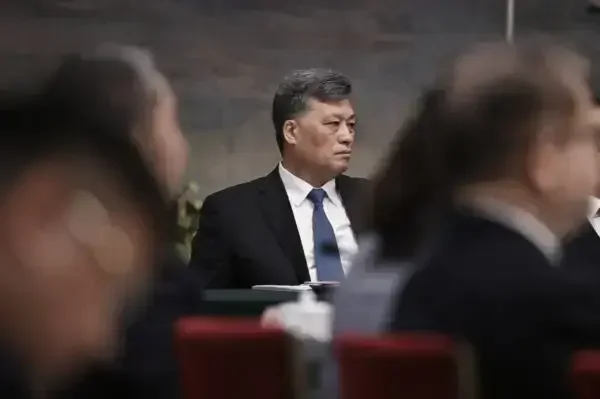
Ma Xingrui, 67, a former CCP Politburo member and former Party chief of Xinjiang, was charged with accepting exceptionally large bribes in exchange for using his official positions to benefit others, China's Supreme People's Procuratorate announced today (November 5).
The case raises an uncomfortable question for Xi: How did an official now accused of decades of corruption continue climbing the political ladder, eventually reaching one of the highest positions in the CCP?
Ma's downfall has also attracted attention because of his reported connections to Xi's wife, Peng Liyuan, and allegations that his family built an extensive network of influence involving the relatives of other senior officials.
From China's Space Program to the Politburo
According to the prosecution, Ma allegedly abused his authority in a series of senior positions, beginning with his leadership roles at China Aerospace Science and Technology Corporation (CASC), the state-owned aerospace giant responsible for much of China's space program.
Ma became deputy general manager of CASC in September 1999 and was promoted to its top Party and management positions in 2007.
He played prominent roles in China's satellite development, lunar exploration, manned spaceflight, and next-generation rocket programs.
In 2013, Ma moved from the aerospace and defense industry into government. He subsequently served as Party secretary of Shenzhen, one of China's most important technology and manufacturing centers, and governor of Guangdong, the country's leading economic province.
In December 2021, he was appointed Party secretary of Xinjiang, a politically sensitive position overseeing a region where the CCP has faced international condemnation over its mass detention and persecution of Uyghurs and other Muslim minorities.
In 2022, Ma joined the CCP's Politburo, one of the country's most powerful decision-making bodies.
The prosecution's announcement listed positions stretching from Ma's aerospace career to his Politburo membership as those through which he allegedly obtained improper benefits.
While prosecutors did not disclose the precise dates of the alleged bribes, the earliest position cited dates to 1999, suggesting potential misconduct spanning more than a quarter-century.
The authorities also did not disclose the total amount of money involved.
Was Xi Promoting an Already Corrupt Official?
The allegations have renewed questions about Xi Jinping's judgment in selecting and promoting senior officials.
Chinese political analyst Li Linyi described Ma as a classic example of an official who continued receiving promotions despite allegedly being corrupt.
In Chinese political terminology, this is known as dai bing tiba, literally "promotion while sick"—a reference to officials being promoted despite existing corruption or disciplinary problems.
Li argued that Xi bears responsibility for Ma's rise.
Independent commentator Du Zheng has made a similar argument in an article published by the Taiwan-based media outlet Up Media.
Du said Xi had promoted numerous trusted officials who later fell from power over corruption or political disloyalty. The sheer scale of these purges, he argued, has weakened Xi's own authority.
Ma's case is particularly striking because he was not simply a local official. He advanced through the strategically important aerospace and defense sectors before being entrusted with leadership positions in Guangdong and Xinjiang, eventually entering the Politburo under Xi.
Family Corruption and Alleged Connections to Peng Liyuan
Ma's political troubles became visible in July 2025, when he was unexpectedly removed as Xinjiang Party secretary.
The official explanation was that he would be given another assignment. No new position was publicly announced at the time.
On April 3, 2026, the CCP announced that Ma was under investigation. Authorities subsequently accused him of serious political and disciplinary violations, including allowing family members and associates to exploit his influence for financial gain.
The Party's disciplinary findings also accused Ma of engaging in improper exchanges involving money and sexual relationships, and of accepting large amounts of money and valuables, either personally or together with relatives and other close associates.
The allegations have drawn particular attention because Ma has long been rumored to have close connections with Peng Liyuan, Xi Jinping's wife. Both Ma's ancestral hometown and Peng's family roots are in Shandong Province.
Veteran political commentator Chen Pokong has argued that Ma's downfall represents a significant political setback for both Xi and Peng.
Chen claimed that Xi and Peng had tried to protect Ma, but opposition from other powerful factions within the CCP eventually made his removal unavoidable.
These claims about behind-the-scenes political struggles have not been independently verified.
Allegations of a Hidden Influence Network
Another potentially explosive aspect of the case concerns Ma's wife, Rong Li.
Independent political commentator Cai Shenkun has alleged that Rong provided expensive insurance policies purchased in Hong Kong and other locations to the wives and children of numerous senior officials.
According to Cai, the policies were worth millions, and in some cases more than ten million, in Chinese yuan.
He suggested that these arrangements helped Ma and his wife build an extensive and discreet network of political influence among China's ruling elite.
If substantiated, the allegations would suggest that Ma's family was not merely accumulating wealth through corruption but also using financial benefits to cultivate political protection and connections.
Separately, Hong Kong's Hong Kong Economic Journal reported on September 27, citing sources in Shenzhen, that Ma's wife and younger brother had allegedly been involved in extensive corrupt dealings. The report also claimed that a woman described as Ma's mistress participated in bribery activities.
These allegations have not been established in court, and the prosecution's November 5 announcement did not specifically address them.
A Corruption Case That Raises Questions About Xi's Authority
Ma's indictment comes amid a widening purge of senior CCP officials, including figures once considered politically close to Xi.
The case exposes a fundamental contradiction in Xi's anti-corruption campaign.
Xi has made fighting corruption a central pillar of his rule since taking power in 2012. Yet Ma, now accused of abusing official positions over a period potentially exceeding 25 years, continued receiving major promotions throughout Xi's leadership.
He rose from China's aerospace establishment to the governorship of Guangdong, then to Xinjiang's top Party position, and finally to the Politburo.
For Xi, the political damage may go beyond the downfall of another senior official.
If Ma had been corrupt for years before entering the Politburo, how did he pass the CCP's repeated political and disciplinary screenings?
And if the allegations involving his family and connections to other senior officials are substantiated, how extensive is the network behind him?
The prosecution may determine Ma's criminal liability. But the larger political question remains: What does his rise—and eventual fall—reveal about the system that promoted him?
11/5/2026