The CCP Tightens the Great Firewall Again: What an Exclusive Leaked Document Tells the Free World
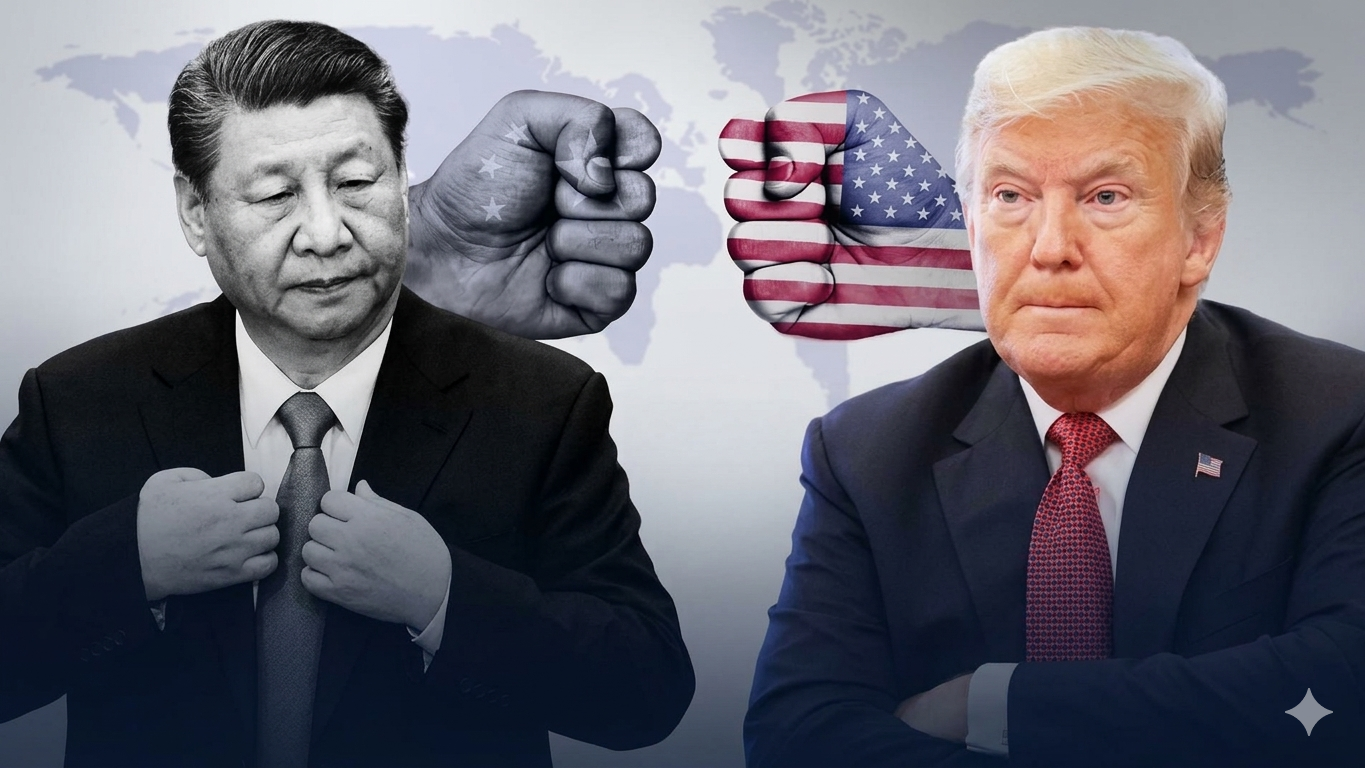
This week, Baodian Times exclusively revealed a new Cyberspace Administration of China (CAC) regulation aimed at stopping the public from “climbing the wall”—that is, using VPNs and other tools to bypass the Great Firewall. The rule once again exposes the CCP’s anti-civilizational, anti-human character as it moves against the global tide. It also shows, from another angle, that the Party’s attempt to strangle information freedom cannot succeed. At the same time, it is a warning to the free world—especially the United States: helping the Chinese people tear down the Firewall is the most effective and cheapest way to push back against the CCP.
The CAC’s Secret Document on Blocking Circumvention Software
According to Baodian Times, 2026 has been the hardest year for Chinese internet users to bypass the Great Firewall since it was built. After the CAC issued the “Opinions on Deepening Dual Integration of Cyberspace and Information Technology Work,” the CAC, the Ministry of Public Security, the Ministry of State Security, the Ministry of Industry and Information Technology, the National Computer Network and Information Security Center, and other agencies jointly intensified the blockade of VPN and other circumvention tools.
The document requires:
1. Make full use of the “Great Firewall Network Resource Coordinated Disposal System” to strengthen monitoring of key domestic and overseas websites and social-media accounts, and to improve detection, early warning, reporting, and handling of “harmful overseas information” flowing back into China. For key groups who use circumvention tools or engage in circumvention, quickly discover, track, effectively block, and promptly clean up.
2. Use the security center’s technology and resources, around major Party and state events, key tasks, major activities, and other sensitive dates, to inspect harmful overseas online content, monitor sensitive and “harmful” information about the Party and the state on overseas social media, and provide special support for overseas public-opinion work.
In other words: technical agencies supply the means to stop people from getting over the wall; public security, state security, and industry regulators control “key supervised populations,” and, when necessary, arrest and suppress them.
Another “Exclusive”: The CCP Hired Silicon Valley Talent to Block Falun Gong Circumvention Tools—With “Unlimited Funds”
This document reminded me of an “exclusive” a high-school classmate told me more than a decade ago.
He studied computer science, finished graduate school in the United States, started a company in Silicon Valley, then went back to China. The Ministry of Public Security recruited him specifically to block circumvention software developed by Falun Gong practitioners.
He told me, with some pride, that the Ministry had been explicit: as long as he could shut it down, there was no spending cap—“unlimited funds.” On the other side, he watched the Falun Gong tools every day and could see that his “opponents” clearly had little money and could only fight with technique.
He also described many technical details of the offense and defense. I am not a technician, so I did not understand them then and certainly cannot recall them now.
The CCP’s internet blockade has grown in lockstep with the internet itself. After the persecution of Falun Gong began, much of the Party’s drive to seal the net came from the need to block Falun Gong information. In the early years, a large share of its energy and money went into fighting Falun Gong; only later did the campaign expand to the entire population.
The Internet and the CCP’s Fatal Fear
Seen now, it is a revealing contest. The basic spirit of the internet is connection, circulation, and sharing of information. The CCP’s mortal fear is that once its grip on information and ideology slips, the regime cannot survive.
Another striking fact: more than twenty years ago the Party already hired top Silicon Valley talent and spent without limit against Falun Gong circumvention software. More than twenty years later it is still escalating—more agencies, more people, more money—yet it no longer dares to claim it will ban circumvention outright. It can only talk about monitoring “harmful information,” or about quickly discovering, tracking, blocking, and cleaning up “key groups” who use the tools.
In this long war of blockade and counter-blockade, can the CCP stay on top forever?
I do not think so.
Once again, it has exposed its own vital point.
Did the U.S. “Freedom Platform” and “One-Click Circumvention” Plan Stall?
Seven years ago, in an interview
with the Center for Security Policy (CSP), I said the most effective and least costly way to defeat the CCP is to help Chinese people obtain free, uncensored information inside and outside China. If most Chinese people fully understood the Party’s crimes and true nature, it is hard to imagine its rule could last.
I do not know whether that suggestion had any effect. This February the U.S. State Department announced a “freedom platform” at freedom.gov meant to let users in heavily censored countries such as China and Iran reach overseas sites with “one click.”
When the plan was announced, many Chinese netizens were elated and passed the news along.
More than half a year later, the project appears to have stalled. Reports cite legal and diplomatic worries inside the U.S. government, disagreement over targeting, technical difficulty, funding problems, and so on.
Better to Take the Initiative Than to Stay on the Defensive
Meanwhile, we constantly see headlines like these:
The CCP is helping Iran confront the United States.
The CCP is interfering in U.S. elections.
The CCP has established more than 100 overseas police stations.
Another CCP-linked spy has compromised an American politician.
Another alleged CCP proxy has gained political office in the United States.
Another piece of farmland near a U.S. military facility has been purchased by Chinese interests.
The FBI has opened yet more investigations connected to China.
And on and on it goes.
In other words, the CCP appears to be operating across dozens — even hundreds — of fronts at once, seeking influence and penetration throughout the United States and the broader free world.
Meanwhile, the United States and other democracies often appear trapped in a permanently reactive posture: addressing one problem after another as each one emerges.
Why not reverse that dynamic?
Why not target what the CCP fears most — the free circulation of information?
Why not move from defense to offense by helping Chinese citizens gain access to uncensored information, ultimately allowing China’s 1.4 billion people to determine their own future and helping China become a normal member of the civilized international community?
Would that not be more effective than endlessly responding, one by one, to the CCP’s countless influence and penetration operations?
After all, the CCP’s ambitions, in my view, do not end with infiltration and influence. It intends to destroy our freedom.
That is why the document revealed by Baodian Times should also serve as a warning to the free world.
If democracies remain permanently on the defensive while Beijing continues strengthening its system of censorship and ideological control, the CCP will continue moving further in that direction.
The struggle over information freedom is therefore not simply a Chinese domestic issue.
It is one of the central strategic questions facing the free world.
9/15/2026