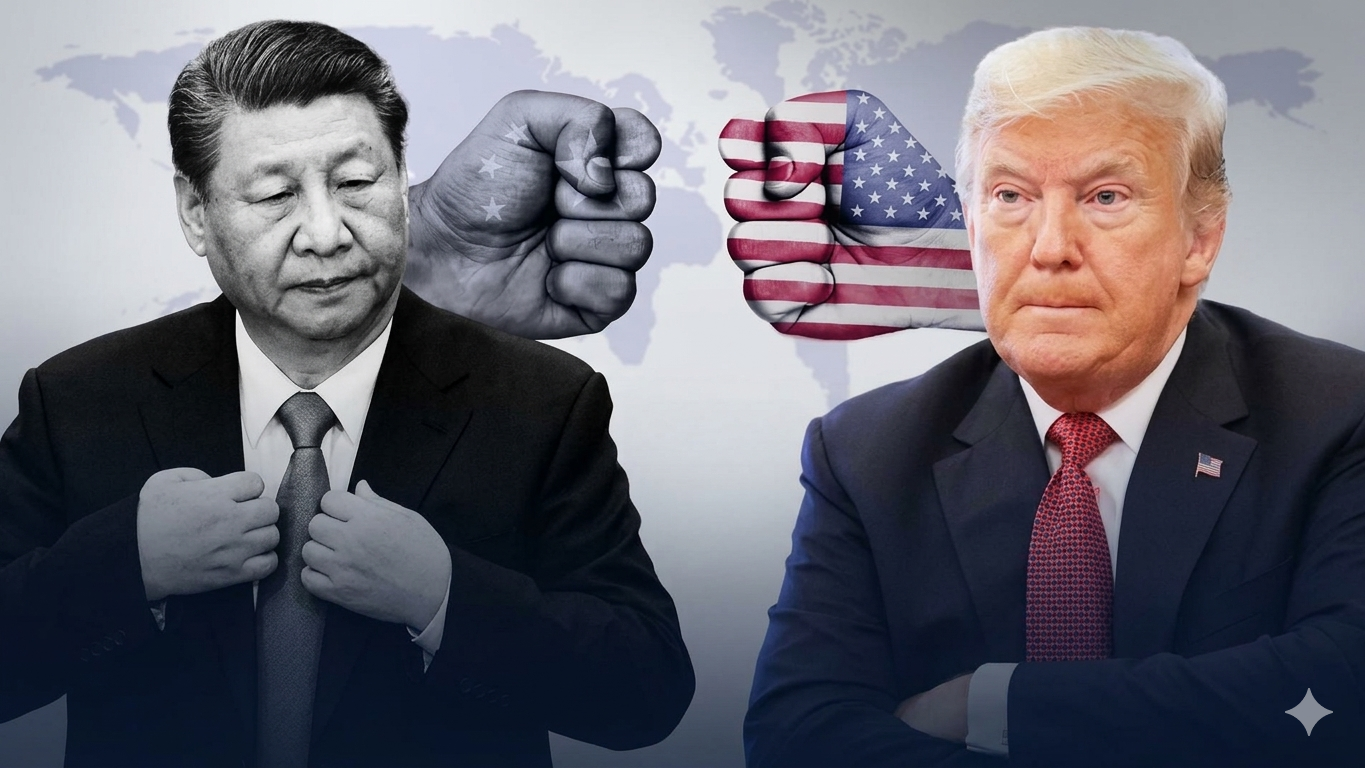
The “American Kill Line” Narrative and the Reality Behind It
The Minnesota fraud case recently exposed by U.S. citizen journalist Nick Shirley has drawn widespread attention for its scale and audacity. According to publicly available reporting and video documentation, fraudulent daycare centers and so-called learning institutions were used for years to siphon large sums of government welfare funds. The revelations understandably shocked many Americans.
🚨 Here is the full 42 minutes of my crew and I exposing Minnesota fraud, this might be my most important work yet. We uncovered over $110,000,000 in ONE day. Like it and share it around like wildfire! Its time to hold these corrupt politicians and fraudsters accountable
— Nick shirley (@nickshirleyy) December 26, 2025
We ALL… pic.twitter.com/E3Penx2o7a
Yet amid this reaction, it is difficult not to notice a striking contrast with a narrative that the Chinese Communist Party (CCP) has been aggressively promoting in recent days: the claim that the United States is governed by a so-called “kill line,” a threshold beyond which ordinary people are rapidly pushed from normal life into total destitution.
The phrase “kill line” is borrowed from gaming culture. In games, it refers to a critical health(blood level) threshold: once a character’s health drops below a certain point, a single attack or combo can eliminate them instantly. The rule is explicit, mechanical, and clearly defined.
The CCP has appropriated this gaming metaphor and applied it to American society, asserting that Americans can fall from middle-class stability into homelessness in as little as six months. State-linked commentary has been filled with dramatic anecdotes and emotionally charged examples. Some articles go further still, directly attacking the U.S. political and economic system. They argue that the existence of an “American kill line” stems from “inherent flaws in the design of the American system,” describing it as an extreme form of social Darwinism dominated by capital logic. According to this narrative, once an individual’s economic output falls below the cost of sustaining their existence, they are labeled a “negative asset” and subjected to implicit systemic elimination. These commentaries contrast what they describe as the transparent and avoidable “kill line” in games with what they portray as a vague and unjust “kill line” in the United States.
Viewed in this context, the CCP’s intentions become clearer. The relentless promotion of the “American kill line” narrative appears to serve two primary purposes. First, it functions as an ideological attack on the United States, aimed at persuading Chinese audiences that the CCP’s own system is inherently superior. Second, it serves as a diversion—shifting attention away from the mounting economic difficulties within China itself and the very real risk that large segments of the population may soon face severe livelihood pressures.
The psychological effect of this messaging is also worth noting. When audiences are encouraged to focus on exaggerated depictions of misery abroad, their own circumstances may appear less alarming by comparison. Whether this perception reflects reality, however, is an open question.
Ironically, the very fraud cases now under discussion suggest a different picture. As evidenced in Nick Shirley’s reporting, the problem in the United States does not appear to be a lack of money. On the contrary, the scale and persistence of these schemes indicate that enormous sums were available—and insufficiently monitored—allowing fraud on the order of hundreds of millions of dollars to continue year after year.
At the same time that such cases highlight systemic oversight failures, the CCP has intensified its portrayal of the United States as a society where a single misstep leads inevitably to ruin. The contrast between these two realities raises important questions—not only about the accuracy of the “American kill line” narrative, but also about why it is being promoted so aggressively at this particular moment.
12/29/2025