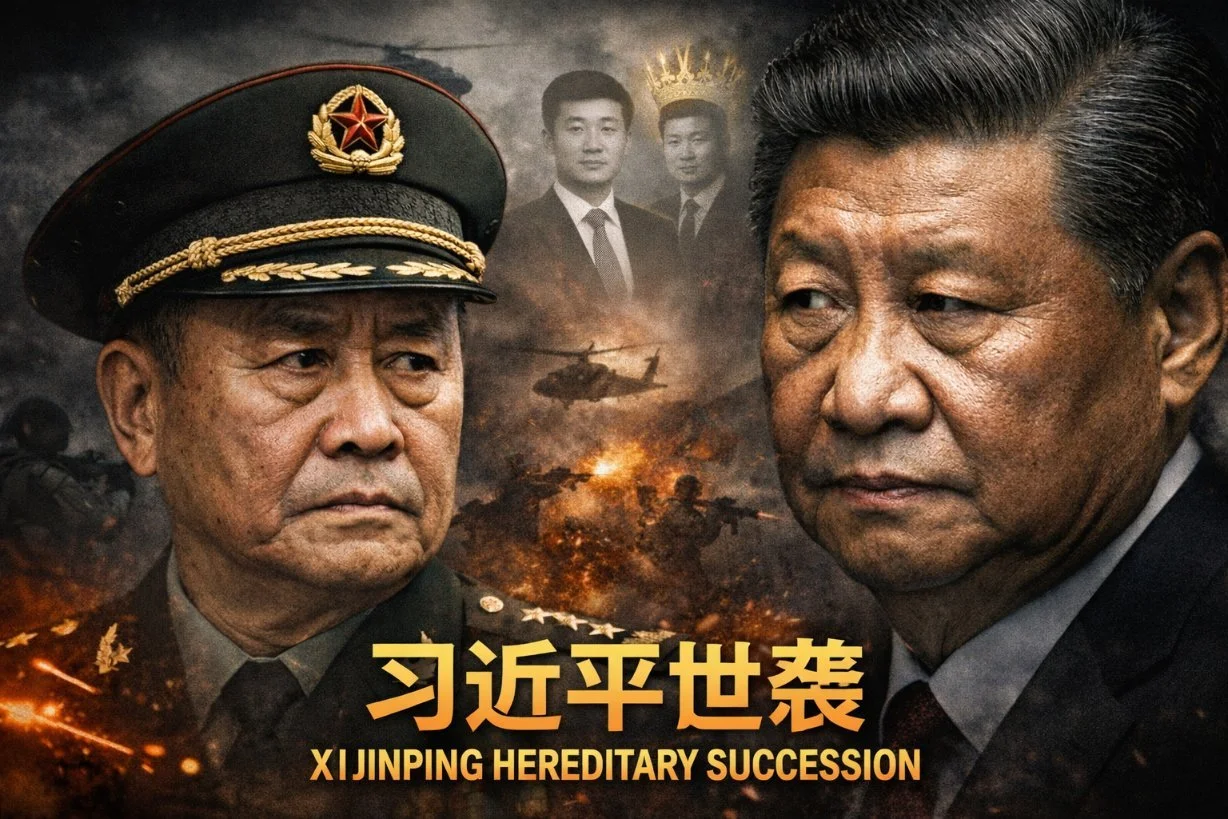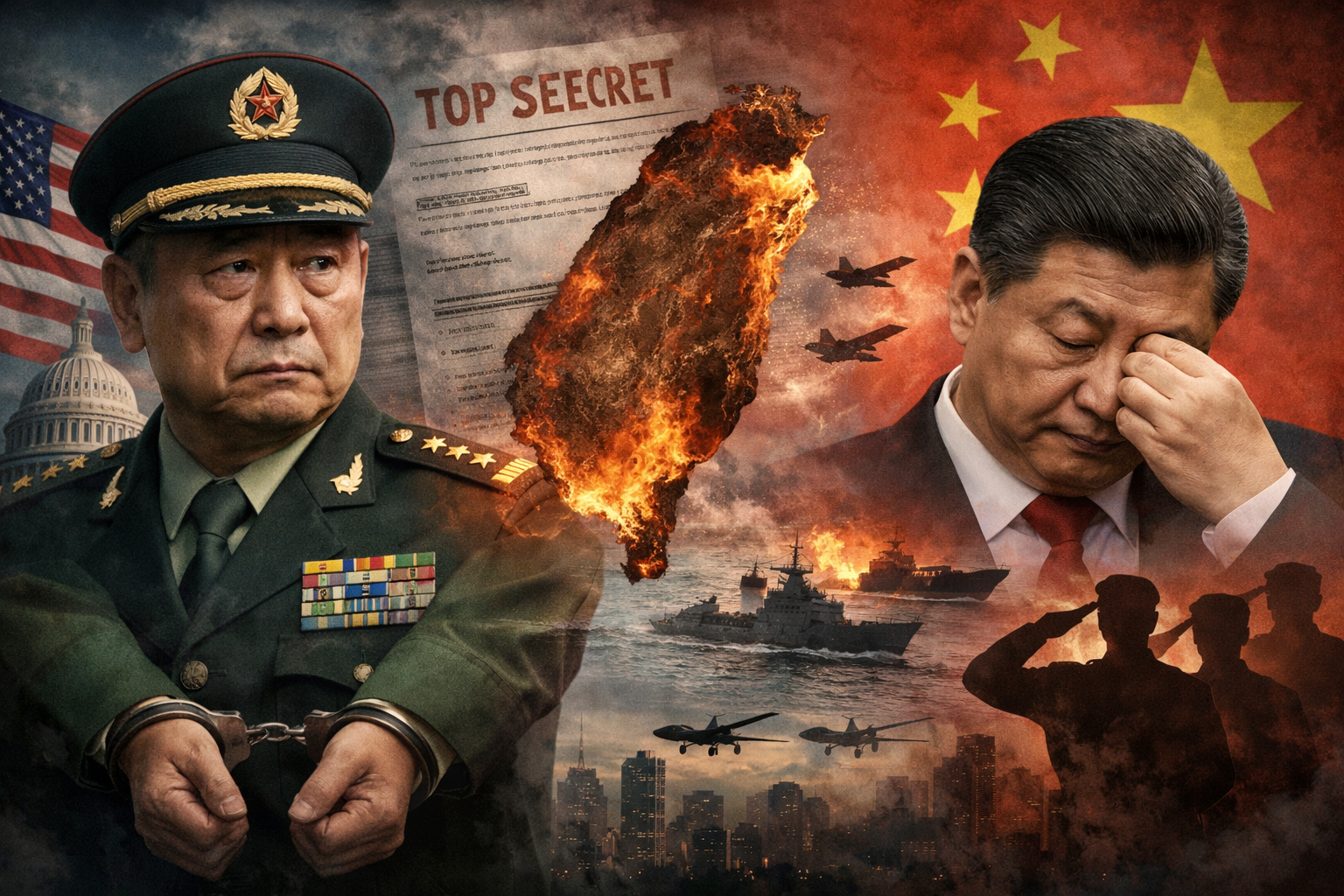
Exclusive Scoop: Many Within the CCP Military Reject Zhang Youxia’s Arrest, Question Its Legal Procedure, and Hope Someone Will Step Forward
I have received an explosive revelation from an official within the CCP system: Currently, within the CCP—including the military—there are many who are dissatisfied with Zhang Youxia’s arrest.
Their views include:
I. The Arrest Procedure Is Illegal
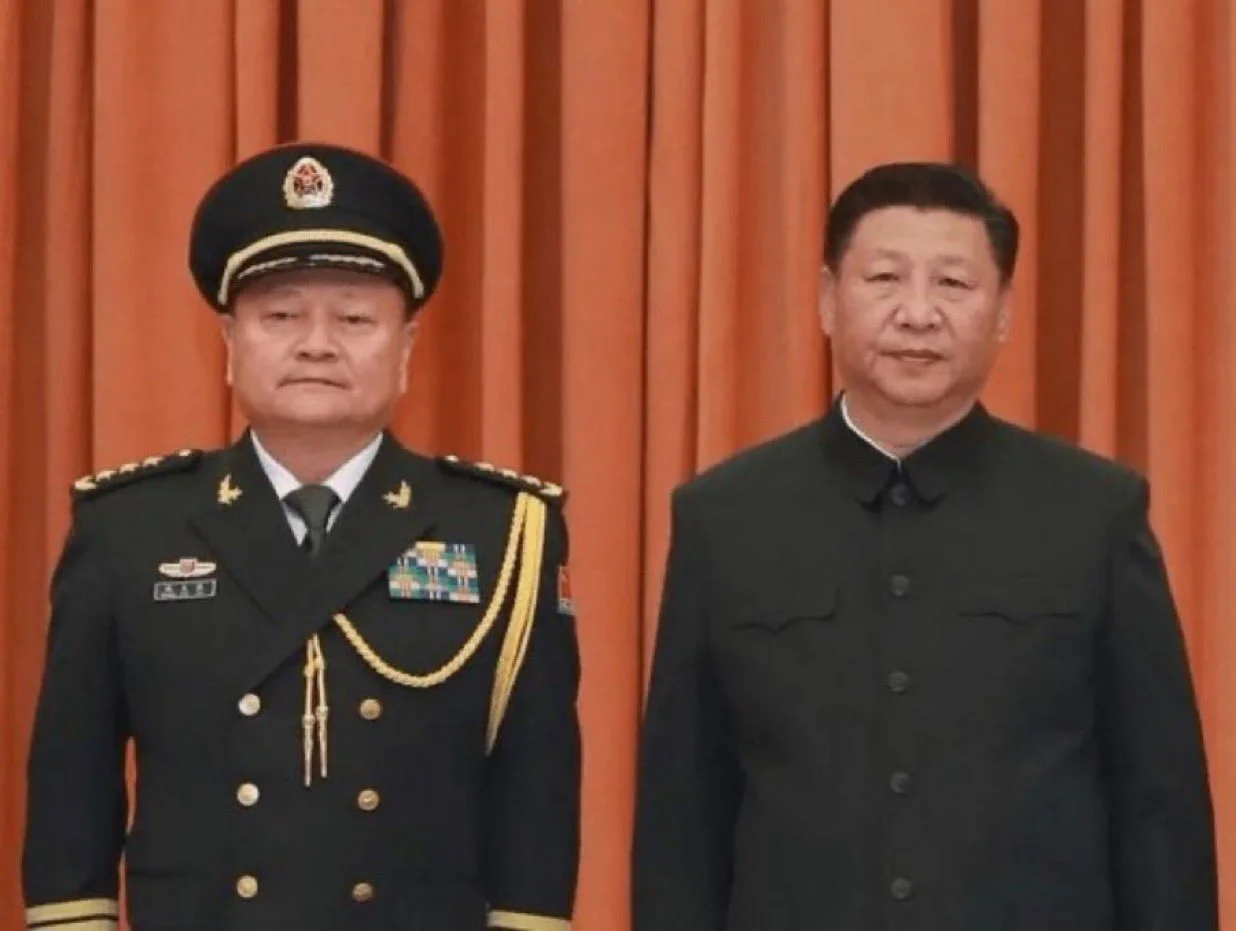
The Ministry of National Defense announced: "After study by the Party Central Committee, it has been decided to file a case for review and investigation against Zhang Youxia and Liu Zhenli."
The question is: Who exactly is the "Party Central Committee"?
According to the Party Constitution and the "Regulations on the Work of the Central Committee of the Communist Party of China," handling officials at the level of Politburo members typically requires convening a Politburo meeting. There has been no formal full meeting of the Central Politburo or Central Plenum held around January 20–27.
Absence of the Politburo: According to the CCP Party Constitution and the CMC's rules of procedure, handling officials at the level of CMC Vice Chairman must be approved by the Politburo Standing Committee or a full Politburo meeting. If there are no meeting records or official announcements (even if retroactively ratified afterward), bypassing broader collective decision-making (such as a full Politburo meeting or full CMC meeting) constitutes non-organizational decision-making and is procedurally illegal.
Paradox of the CMC Vote: The current CMC members number only four: Xi Jinping, Zhang Youxia, Liu Zhenli, and Zhang Shengmin. If Zhang Youxia and Liu Zhenli are excluded, the remaining votes in favor of the "arrest" cannot represent the collective will of the "Central Military Commission." Bypassing procedures for direct arrest is nominally a "non-procedural action" and实质ly amounts to "kidnapping."
Legal Dilemma: If only Xi Jinping and Zhang Shengmin (or a very small number) remain, procedurally, it is impossible to assemble a "collective CMC decision" that complies with the rules of procedure. If it is claimed that the "Central Military Commission decided to arrest the CMC Vice Chairman," yet this decision could not be made through a compliant CMC meeting, then in administrative logic, this constitutes "non-procedural exercise of power" and is an illegal action!
Therefore, although this operation has become a fait accompli politically, the gaps it leaves in legal and procedural terms are unprecedented. This approach breaks the long-standing unspoken rule of "procedures maintaining stability."
Crisis of Trust: Zhang Youxia and Liu Zhenli have been deeply rooted in the military for many years, and Zhang Youxia has actual combat experience with extremely broad connections in the armed forces. Such a "lightning-style" purge with questionable procedures has triggered panic among grassroots and mid-to-high-level generals, leading to a collapse of trust in the military command chain.
Reactions from Theaters and Local Commands: The current so-called "high-level decision," due to lack of procedural legitimacy, devolves into personal behavior and is highly illegal procedurally. This action is regarded by commanders and fighters in various theaters as "non-organizational life" behavior.
This kind of "abnormal procedure" and "unjust action" has led to doubts among commanders and fighters in various theaters. This is the key indicator why the theaters have not issued intensive statements "supporting the central decision"—because this is not a "central decision."
In political games, procedural justice is often the most legitimate "shield" for subordinates to resist superiors. If theater commanders and fighters believe this so-called "arrest" is of a "kidnapping nature," "contrary to common sense," and "non-procedural," theoretically they can resist under the banner of "safeguarding the Party Constitution," "safeguarding the Party Central Committee," or "safeguarding the CMC system," and even rise up in collective resistance.
II. The "Chain Reaction" of Procedural Violations
"The delayed statements from various theaters" is an important observation window. In a highly centralized system, silence is itself an attitude.
Observation Period and Game Period: When huge procedural flaws appear, powerful local factions (theater commanders and political commissars) enter a "political observation period." They need to judge: Is this an unchallengeable fait accompli, or a legal loophole that can be exploited?
Formation of Consensus: When different theaters discover that no one has made uniform statements right away, a latent consensus forms—that "there is a problem at the central decision-making level." This consensus becomes the foundation for taking further action.
III. "Collapse of Trust" and the Atomization of the Military
Zhang Youxia, as a military veteran and representative of the combat faction, and Liu Zhenli as an active-duty combat general, represent the "professionalism" and "traditional bonds" within the military. Their arrest means:
Loss of Sense of Security: If even a CMC Vice Chairman and Chief of Staff can be "kidnapped" without procedure, then no general is safe. This panic quickly translates into centrifugal force against the supreme commander.
Break in the Command Chain: Military command relies on a legitimate flow of orders. Once the grassroots deem the source of the order flow illegal, the entire command system falls into paralysis, and even separatist self-preservation postures may emerge in various theaters.
IV. The Fuse of a Political Powder Keg
Procedural violation (kidnapping) → Logical paradox (insufficient votes) → Theater observation (refusal to endorse) → Just cause (safeguarding the Party Central Committee) → Latent mutiny.
In such an environment, any small spark—such as a theater suddenly issuing an ambiguous announcement, or an important general refusing to attend a meeting—could trigger a chain reaction.
V. Key Observation Points Ahead:
Whether the authorities will urgently "retroactively approve" by forcibly convening a nominal "expanded meeting" to ratify legitimacy afterward.
The specific wording in theater statements: Watch for phrases beyond "upholding the CMC Chairman responsibility system" that emphasize "collective leadership" or "authority of the Party Constitution."
If a theater raises questions in the name of "earnestly requesting the central authorities to clarify the decision-making procedure and safeguard the rule-of-law image of the Party and military," that would be "just cause."
The key point is not whether "Zhang Youxia is innocent," but whether "the procedure is legal." Innocence can be investigated, but procedural illegality is a trampling on the very foundation of the entire system.
The official said that many people in China are now in a state of anxiety and confusion—they dare not act, feeling dazed, all hoping someone will step forward and raise their arm to call out. If two or more theaters jointly raise "procedural questions," the central authority would collapse instantly.
1/30/2026