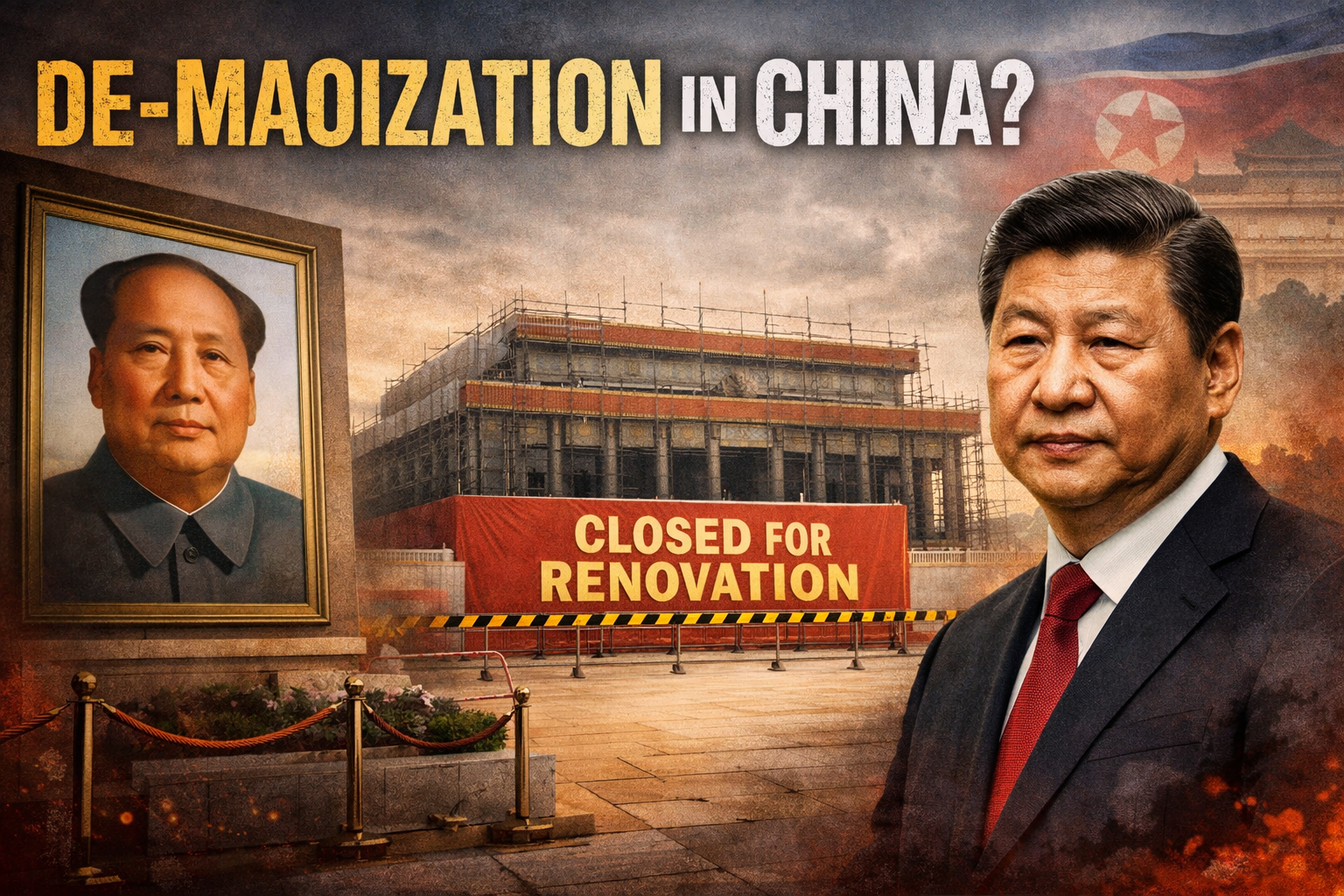
Breaking: Xi Tests “De-Maoization”? Beijing Shuts Mao Memorial Hall for 5-Month Renovation
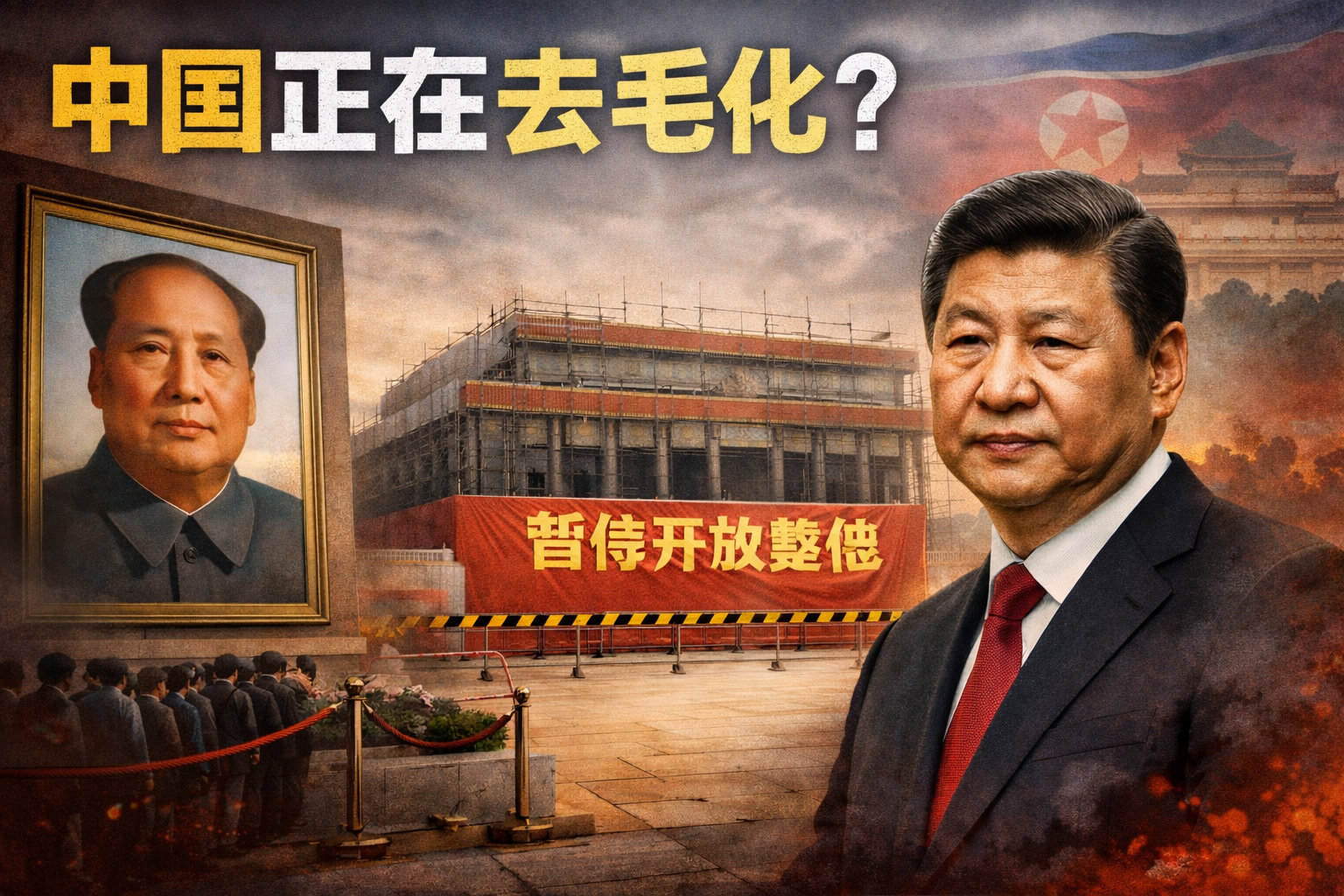
Beijing, March 13, 2026 — The Chinese Communist Party’s decision to close the Chairman Mao Memorial Hall for more than five months may be more than a routine renovation. Some observers believe the move could serve as an early test of “de-Maoization” under Xi Jinping, potentially signaling an attempt to gradually reduce Mao Zedong’s symbolic role while consolidating Xi’s own ideological authority.
The administration of the Mao Memorial Hall announced on March 13, 2026, that the site in Tiananmen Square will be closed to the public from March 16 through August 31 for maintenance and renovation.
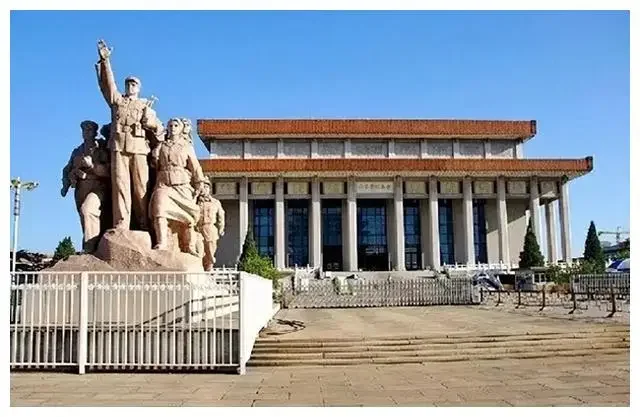
Mao Memorial Hall
The hall houses the embalmed body of Mao Zedong, the founding leader of the People’s Republic of China, and has long been one of the Chinese Communist Party’s most powerful revolutionary symbols.
Officials described the closure as routine maintenance necessary to preserve the structure, which opened in 1977 and covers more than 40,000 square meters. The memorial has undergone several previous renovation periods, including 1997–1998, 2007, and 2017.
However, analysts say the timing of the closure has sparked speculation about possible political symbolism behind the decision.

Outside the Mao Zedong Memorial Hall, people line up waiting to enter.
A Possible Signal of “De-Maoization”
In an online video discussing the announcement, Michael Hu, a former Chinese entrepreneur who now lives in the United States, argued that the renovation may carry deeper political meaning.
Hu suggests the move could be a trial step by Xi Jinping to gradually weaken Mao’s central symbolic position in the Party’s narrative.
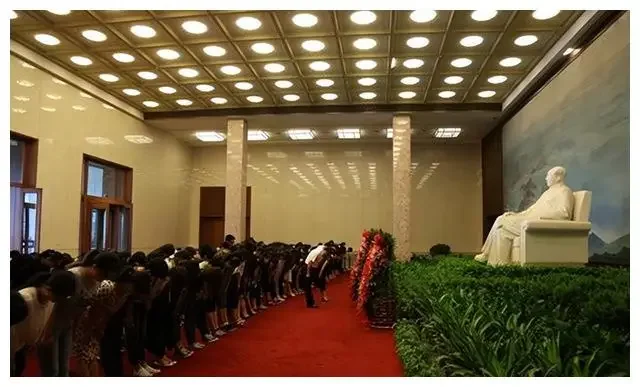
Inside the Mao Zedong Memorial Hall, visitors bow to the seated statue of Mao Zedong.
According to Hu, Mao’s preserved body in Tiananmen Square remains one of the most visible reminders of the CCP’s revolutionary era and Mao’s personality cult.
“If Xi wants to fully establish his own ideological authority, Mao’s overwhelming symbolic presence becomes a political obstacle,” Hu said in the video.
Hu speculated that closing the memorial hall for an extended period could serve as a test of public reaction. If the closure does not provoke strong resistance, it might pave the way for further changes in the future.
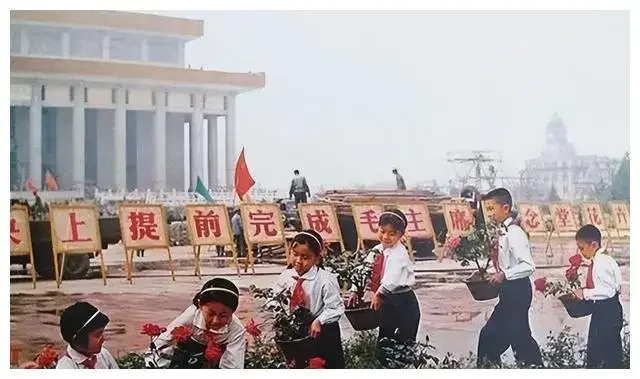
Elementary school students participate in building the Mao Zedong Memorial Hall. The banner behind them reads: “Work hard and move fast to complete the flowers display for Chairman Mao’s Memorial Hall ahead of schedule…”
Some commentators have long speculated about whether Mao’s body could eventually be removed from public display—similar to recurring debates in Russia over the fate of Vladimir Lenin’s mausoleum.
No such plan has been officially suggested by Chinese authorities.
Xi’s Broader Power Consolidation
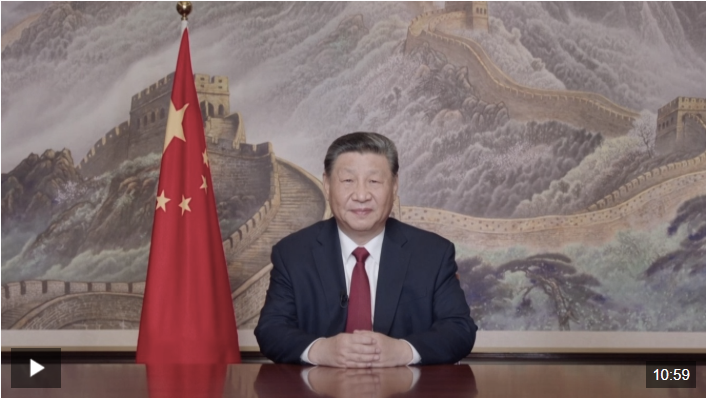
Hu also places the memorial hall closure within the broader context of Xi Jinping’s consolidation of power over the past decade.
Since taking office, Xi has centralized authority within the Party and promoted “Xi Jinping Thought” as the guiding ideology of modern China.
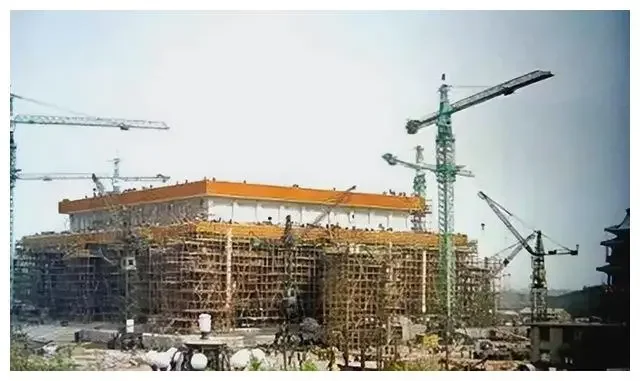
The Mao Zedong Memorial Hall under construction.
While Mao remains officially revered as the founding leader of the People’s Republic, Hu argues that Xi’s long-term goal may be to shift the ideological center of the CCP away from Mao and toward himself.
“Xi is trying to build a system where loyalty is directed primarily toward the current leader,” Hu said.
A “North Korea-Style” Political Model?
Hu goes further in his analysis, suggesting that Xi may be attempting to construct a North Korea-style political structure centered on the ruling family.
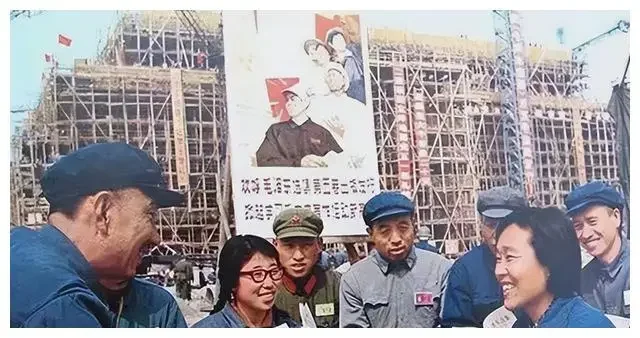
The Mao Zedong Memorial Hall under construction.
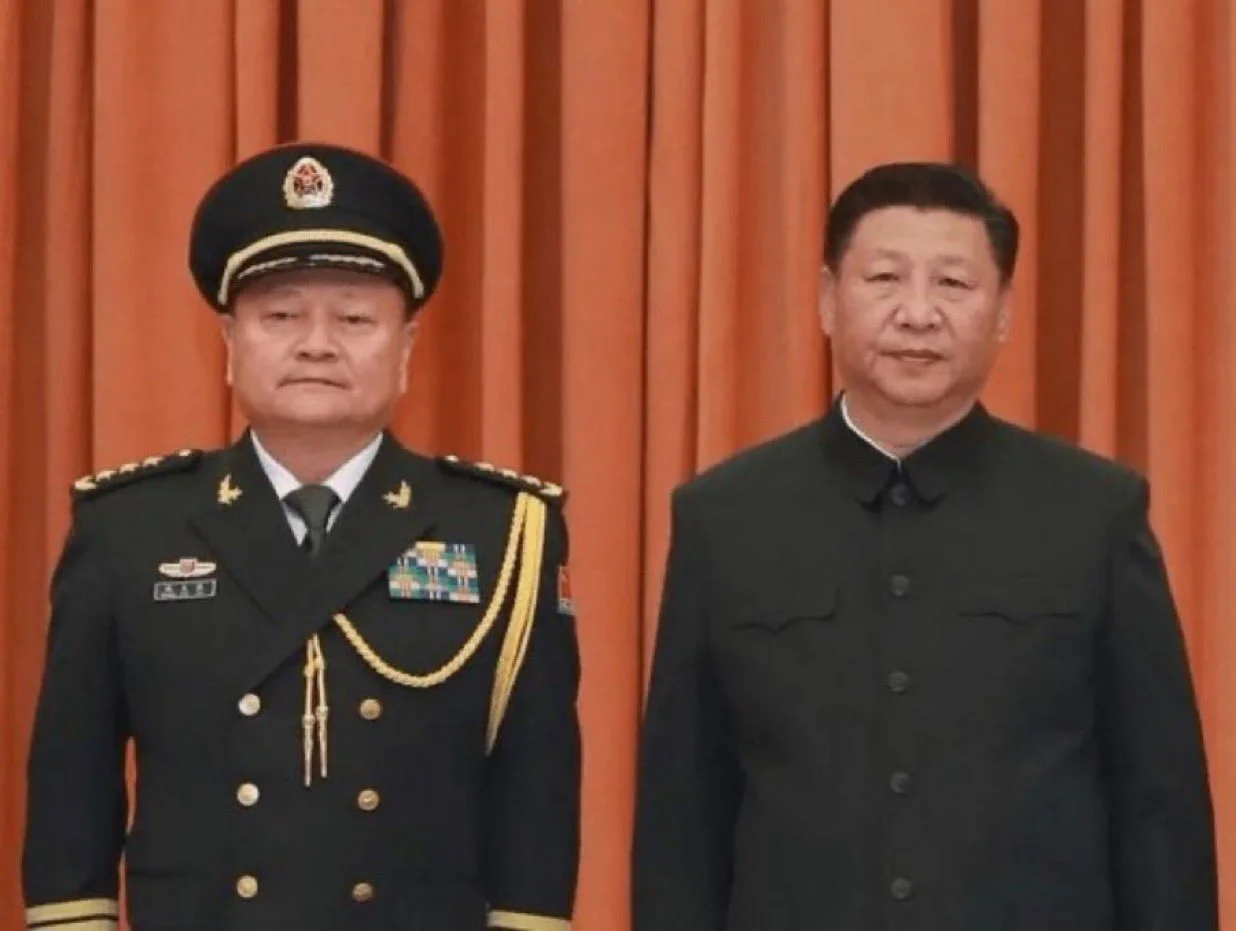
According to Hu, Xi’s tightening control over the Party, the military, and ideological discourse could reflect ambitions to establish a “Xi family dynasty” within the CCP’s political system.
Such a model would require reshaping historical narratives and reducing the symbolic dominance of past revolutionary figures.
“In that sense,” Hu argued, “redefining Mao’s position—or gradually reducing the visibility of Mao’s cult—could be part of a longer strategic process.”
Official Silence on Political Motives
Chinese authorities have not indicated any political significance behind the closure.
The official announcement described the renovation strictly as maintenance work on interior facilities and infrastructure to ensure the building’s safety and preservation.
The memorial hall has remained one of the most visited political landmarks in China for decades, drawing millions of visitors annually.
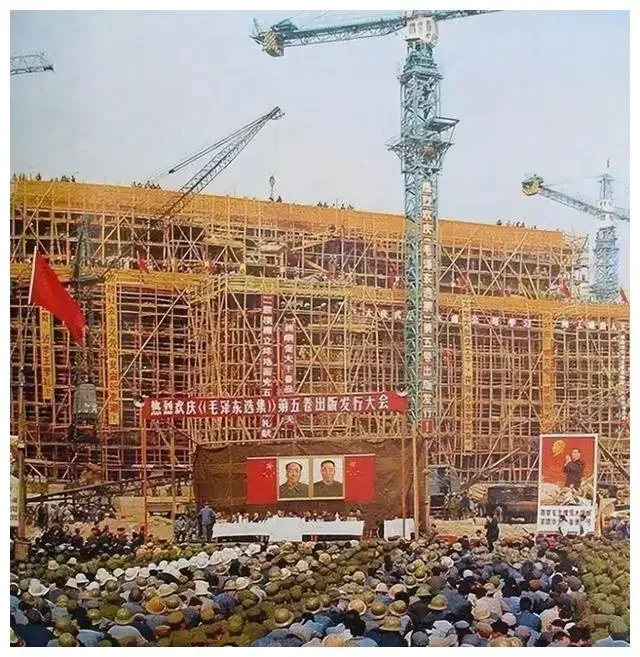
Workers building the Mao Zedong Memorial Hall hold a meeting in front of the hall to celebrate the publication of Selected Works of Mao Zedong, Volume V.
Whether the temporary shutdown proves to be merely routine maintenance—or a subtle test of political change—remains uncertain.
But for observers like Hu, the event raises a broader question: Is Xi Jinping beginning to reshape the CCP’s revolutionary legacy in order to elevate his own place in China’s political history?