
All in Journalism 我的報導

Report: Hopes That Guided US China Policy Proven ‘Futile’
The Chinese Communist Party (CCP)’s coordinated and long-term efforts to become a dominant global power have put at risk the national security and economic interests of the United States, its allies, and its partners, and U. S. policy makers have difficult decisions to make based on the new reality.

Resolution to Stop Cold Genocide Starts Conversation in America’s Largest Medical Association
A resolution aimed at preventing organ transplant operations from becoming “a profitable tool in a cold genocide” was presented at an annual meeting of the American Medical Association in Washington on Nov. 11.

Pressure Needed to Change Chinese Regime, Expert Says
An expert said that the United States and its allies must use all available means to modify the attitudes and behavior of the Chinese Communist Party .

音樂製作人:史上最好演出 改變生命
「趕快來看神韻,神韻會改變你的生命。」

China Is a Unifying Factor for a Divided America, Experts Say
The United States may be as divided as it can be in many ways, but one thing unites it, and that is China, experts say. That unity has expressed itself in a foreign policy that won’t change much after the midterm elections.
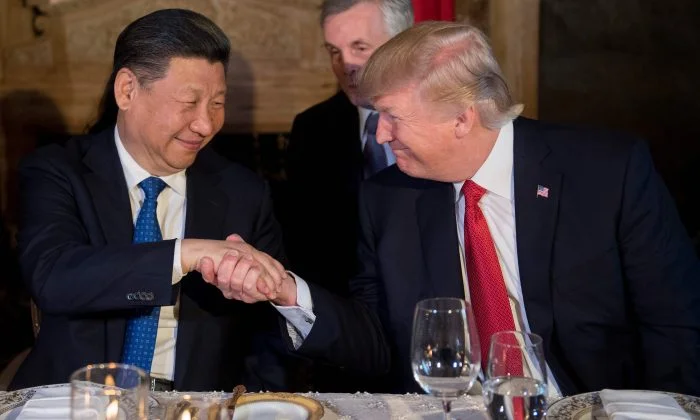
US-China Differences Make Security Dialogue Difficult
A delayed top-level diplomatic and security dialogue between the United States and China will be held in Washington on Nov. 9, but experts doubt whether it will be productive.

探望倪玉蘭 洪博培體驗美國強大之處
這次經歷讓他認識到,美國之所以強大,不在於它的軍事力量,而在於它的價值觀能夠贏得人心,改變歷史。

Advocate For Hong Kong Warns US Legislators: City’s Freedom at Risk
According to Benedict Rogers, chair of trustees of Hong Kong Watch, UK, the “final straw” in the degradation of Hong Kong’s special status would be the passage of Article 23 of Hong Kong’s Basic Law.

The Great Debate: Are the United States and China Incompatible?
Relations between the two countries have been changing rapidly and drastically. To help come to terms with the new situation, the Brookings Institution and Yale University staged a debate on Oct. 30.

Chinese Regime Seeks to Limit Debate in West, Out of Self-Preservation
After decades of a failed policy of “engaging China,” democracies around the world are facing the reverse situation.

Beijing Seeks to Control Media Voices Outside China
As part of its global challenge to democratic freedom, the Chinese Communist Party (CCP) is making a systematic effort to spread propaganda and to suppress undesirable voices both inside and outside of China, a panel of journalists and experts said at a symposium staged by Freedom House.

US Dissatisfied With Religious Freedom Around the World, Says Ambassador Brownback
Even so, the United States will continue to pursue the religious freedom of everybody, everywhere, as a God-given right.
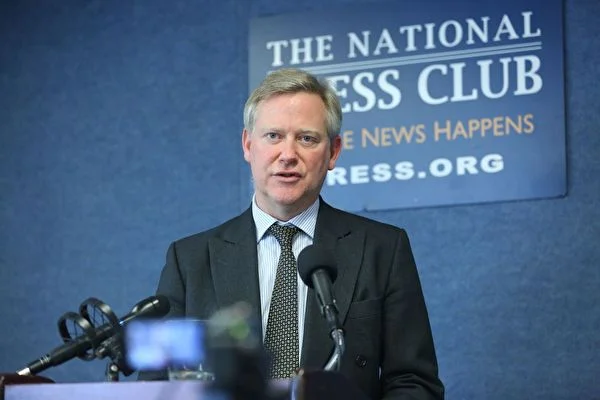
中共入世負效應:侵蝕市場經濟道德基礎
對於西方國家來說,容許中共治下的中國加入世界貿易組織是一個重大誤判,因為中國沒有一如預期地發生政治變革,反而鞏固了中國共產黨的執政地位。

The West Needs to Come to Terms With the Disaster of China’s Entry Into the WTO: Expert
To allow China to join the World Trade Organization (WTO) was a big mistake caused by miscalculation by the West. It hasn’t induced political changes as expected, but has cemented the Communist Party in power. It set the backdrop for the 2008 financial crisis, and leaves the West with a superpower global rival antithetical to its values.

Virginia Resident Feels Beijing’s Unfriendly Attention
Many people in the United States may have recently heard about the “influence operations” and spying by the Chinese communist regime in America and other countries. Angela Wang, a 69-year-old resident of Virginia, has not only heard about these things, but also experienced and suffered from them.

Warning From Down Under: Influence From China, Not Russia, Is Most Dangerous
“The PRC has a far more long-term, subtle, carefully thought through the objective of gaining influence. It doesn’t want to disrupt the institutions. It doesn’t want to undermine democracy. It wants to control the practices of institutions and the people involved in the exercise of democracy.”
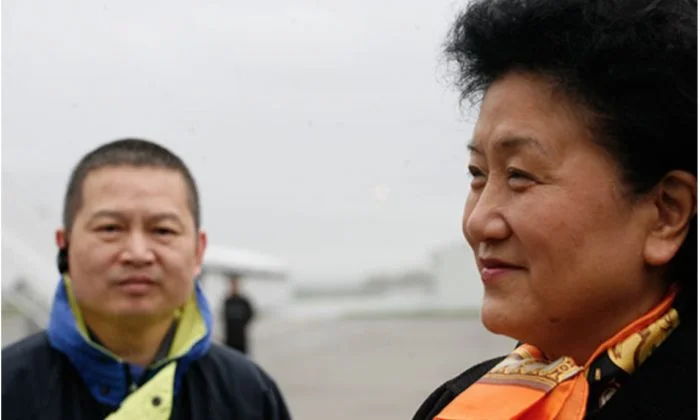
獨家調查:俄勒岡州孔子課堂立法後的中共黑影
一封「意外」的電子郵件,居然引出一樁八年前的「舊案」:美國西部俄勒岡州議會2010年通過的一項將孔子課堂引入公立學校的法案背後,中共的黑影若隱若現;再深挖下去會發現,中共對俄勒岡州的浸透程度,可能遠遠超出很多人的想像。

Leaked Document Advises Chinese Regime on Fighting New Cold War
A leaked internal Chinese government document shows that “unrestricted” and “supernormal” means should be adopted to counter the United States, including using “more precise, better concealed, and special ways” to expedite the process of acquiring overseas talent, cutting-edge equipment and technology in the very short “window” that still exists before the United States completely blocks China from importing key technology.

Religious Freedom Should Be Part of Trade Agreement with China, Expert Says
“The Chinese Communist Party’s persecution of Falun Gong has lasted for more than 19 years. It is the most ruthless and the largest-scale persecution in Chinese history,” Zhang explained. “Without including Falun Gong in the human-rights dialogues or agenda, the talks will be incomplete, and lack substantiality.”